

4/24/14
With an aging population and increasing awareness of the condition, dry eye has become one of the hottest topics in eye care today. There have been numerous advances in our understanding of the condition as well as several breakthroughs in treatment.
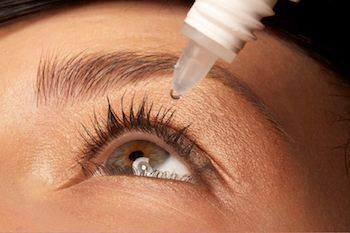
Lets start with the most fundamental question. Why do we have tears? Tears serve many functions, but perhaps the most important is that they create a perfectly smooth optical surface at the front of the eye to allow sharp focusing. The sharper your vision the more quickly you can spot and run from a predator or find a supply of food. Hence, a stable tear film is critical for survival. As a result, the body has evolved many ways to help keep the tears healthy and intact.
When I describe the tears to a patient I describe it as a structure. Tears have a foundation that anchors them to the eye’s surface, an elastic protective support section not that different than the walls in a building and even a roof, just like a house has. Like a house, problems with any structural part can adversely impact the entire building.
Over the past few years the most important breakthroughs in understanding dry eye have focused on the outer portion of the tear structure – what you might think of as the roof. When a roof develops holes and it rains, water gets in which can destroy the entire structure of the house. With the tears, holes in the “roof” can let moisture evaporate causing the structure to collapse and become unstable.
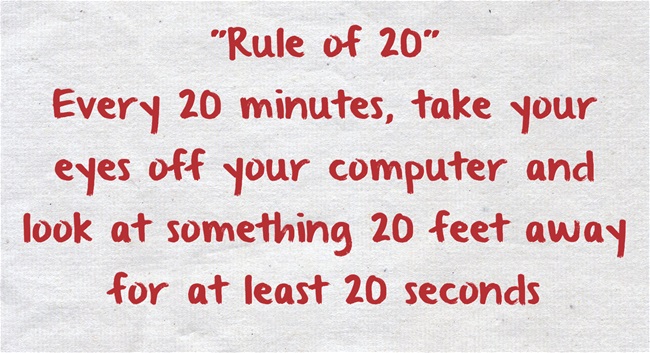
The outer layer of the tears consist of lipid or oil produced by the meibomian glands – glands that run radially through the lids and express small amounts of complex oil with each blink. When these glands work properly, the oils they produce coat the tears, preventing evaporation and stabilizing and lubricating. When the glands become blocked – which can occur for a number of reasons including decreased blinking due to excessive computer use, the lack of oil can lead to a down spiral of damage to the eye’s surface with symptoms that can range from annoying to life altering.
Lets talk for a moment about symptoms. We know that dry eye is progressive and, if left untreated will worsen over time, so the sooner we know about it, the sooner treatment can begin. I am often surprised that even with increased awareness, most patients don’t recognize that they suffer from dry eye until the condition is fairly advanced. One reason is that many people think that the symptoms of dry eye are a normal and expected part of aging. For the most part they are not. If you experience, burning, irritation, unstable vision, grittiness or any change in your vision or eye comfort, you should bring this to the attention of your eye care practitioner.
One of the most common signs of dry eye is excessive tearing. Patients often complain that their eyes are too wet and I have to explain that the excessive tearing is the eye’s way of trying to correct for dryness and prevent further damage. Unfortunately excessive tearing further destabilizes the tears and makes matters worse.
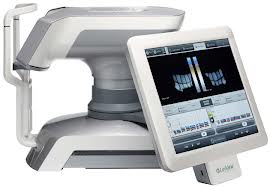
Perhaps the greatest advance today is the recognition that meibomian gland dysfunction causes or contributes to nearly 90% of all dry eye. Many eye care providers are adding high tech tools like meibography which can show the actual state of the meibomian glands like an X-Ray and LipiView which measure the actual thickness of the lipid layer of the tears. As a result diagnostic ability has improved.
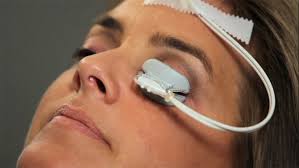
Recently introduced eyedrops like Alcon’s Systane Balance and Allergan’s Refresh Optive Advanced Formula drops can help restore absent or deficient oils in the tears. And new treatments including moist heat goggles like Tranquileyes by EyeEco can help improve comfort. LipiFlow, a technology pioneered by TearScience, offers a breakthrough treatment that can clear blocked and reset meibomian glands. It can produce amazing improvement.
There have also been significant advances for contact lens wearers suffering from dry eye. Scleral lenses are especially helpful for patients with advanced dry eye who also must wear contact lenses to see, such as those who have keratoconus. The large scleral lens serves as a barrier that protects the eye and provides sharp stable vision. In fact, scleral lens designs are used as a treatment for severe dry eye and ocular surface disease.
Finally, if you have been diagnosed with dry eye previously and are still suffering despite treatment, this may be a good time to return to your eye care provider to discuss your condition and explore the possibility of new treatment options.
 Arthur B. Epstein, OD, FAAO
co-founder of Phoenix Eye Care
and the Dry Eye Center of Arizona
Fellow of the American Academy of Optometry
American Board of Certification in Medical Optometry
Chief Medical Editor of Optometric Physician™
 Bezalel Schendowich, OD