
National Glaucoma Awareness Month

January is National Glaucoma Awareness Month –                                    An important time to raise awareness for this sight-robbing disease.

Glaucoma is an age-related disease and is the second leading cause of irreversible blindness in people over 40. Glaucoma is 6 to 8 times more common in African Americans than Caucasians. If you have a close blood relative with glaucoma, it raises your risk of getting it.

Glaucoma is the sneak thief of sight, since there are no symptoms and once vision is lost, it’s permanent. As much as 40% of vision can be lost without a person noticing. 

More than 3 million people in the United States and over 60 million people worldwide, have glaucoma. Experts estimate that half of them don’t know they have it. Combined with our aging population, we can see an epidemic of blindness looming if we don’t raise awareness about the importance of regular eye examinations to preserve vision.

How to Help Raise Awareness

In the United States, approximately 120,000 are blind from glaucoma. Here are three ways you can help raise awareness:

talk to your family about glaucoma awareness
Talk to your friends and family
  • Talk to friends and family about glaucoma. Do not keep it a secret. Let your family members know.
  • Get involved in your community, educational seminars, support groups, and more.


What is Glaucoma?

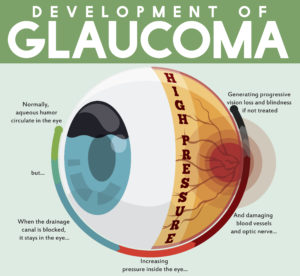
Glaucoma is a disease that causes damage to the major nerve of the eye called the opdevelopment of glaucomatic nerve, a part of the central nervous system that carries visual information from the eye to the brain.

The eye experiences a gradual increase of intraocular pressure (IOP) due to an imbalance of the fluid produced in the eye and the amount of fluid drained. Over time, elevated IOP can cause vision loss. The most common form of glaucoma is primary open angle glaucoma which affects about 3 million Americans. However, there are other types including narrow angle, congenital, normal tension, and secondary glaucoma.

There is no cure for glaucoma—yet. However, medication or surgery can slow or prevent further vision loss. The appropriate treatment depends upon the type of glaucoma among other factors. Early detection is vital to stopping the progress of the disease.


Risk Factors

How do you know if you are at risk for glaucoma? Those at higher risk include people of African, Asian, and Hispanic descent. Other high-risk groups include: people over 60, family members of those already diagnosed, diabetics, and people who are severely nearsighted.

Regular eye exams are especially important for those at higher risk for glaucoma, and may help to prevent unnecessary vision loss. In the most common form, there are virtually no symptoms. Vision loss begins with peripheral or side vision, so if you have glaucoma, you may not notice anything until significant vision is lost.


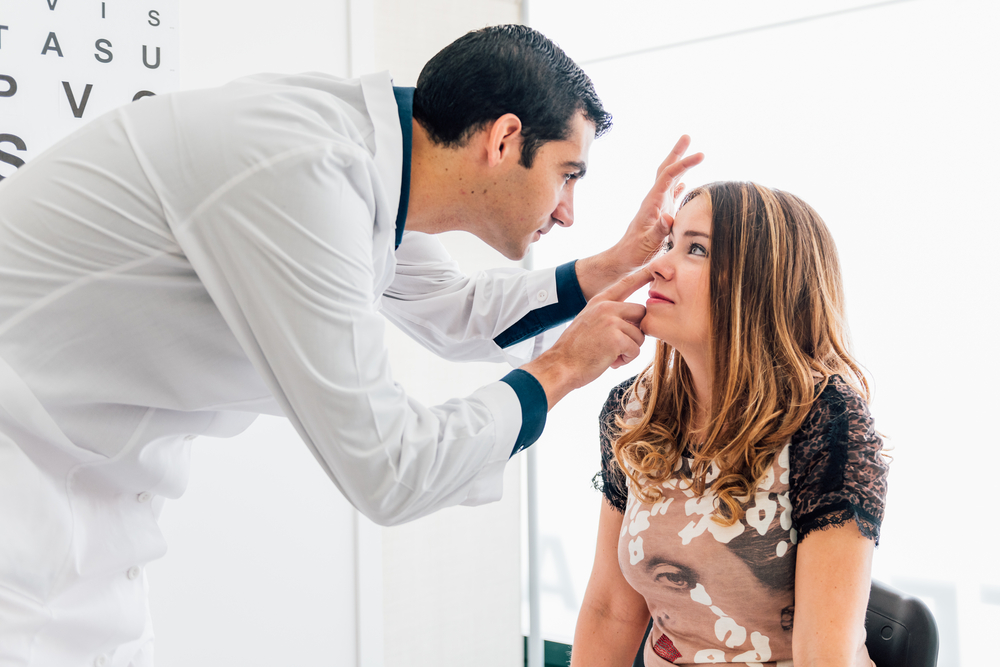
Getting your eyes checked by an ophthalmologist regularly will be the best way to detect glaucoma or any other eye disease early.


A Healthy Diet for Your Eyes!

As we age, it’s normal to experience a change in eyesight, so it is important that we’re doing everything we can to keep our eyes clear and healthy. Eating a nourishing diet is not only good for your body, it’s also great for your eyes. There’s an easy way to improve your eye health: Start by making the same nutritious food choices that are good for your overall health and wellness.

The following vitamins, minerals and other nutrients are essential for good vision and may protect your eyes from sight-robbing conditions and diseases such as Age-Related Macular Degeneration (AMD).

Fruits and Vegetables

The nutrients in both fruits and vegetables provide antioxidants, which can help maintain healthier eyes. Fruits and vegetables also provide protection because many of their nutrients deliver antioxidants that our bodies cannot synthesize.

For example, lutein and zeaxanthin are important antioxidants that help prevent degeneration in the lens and retina. Eating a diet rich in these carotenoids helps reduce the risk of AMD by fighting oxidation in the retinal cells of the eye.

Foods rich in lutein and zeaxanthin are typically dark-colored fruits and vegetables, including: 

  • spinach
  • kale
  • collard greens
  • yellow corn
  • carrots
  • kiwi
  • mangos
  • melons

Omega-3 Fatty Acids

Eating fatty fish, such as salmon, tuna, mackerel, and sardines, that are rich in omega-3 fatty acids also helps lower the risk of AMD. Omega-3 fatty acids are rich in docosahexaenoic acid (DHA), which is important for eye health and visual function. People with dry eye syndrome (i.e., low tear production) can benefit from a diet rich in omega-3 fatty acids because dry eye is linked to low levels of DHA.



However, studies have found that omega-3 fatty acid vitamin supplements may not provide as much protection. That means it’s better to eat the fish than just take omega-3 supplements. It’s important to note that heavy consumption of fish can contribute to high mercury levels (How Much is Too Much Mercury). 

You can also find omega-3 fatty acids in plant-based sources, such as:

  • nuts
  • seeds (flax seeds and chia seeds)
  • dark, leafy greens (romaine, arugula, spinach)

B Vitamins

Higher levels of B vitamins may lower your risk of developing AMD.

Foods that are high in vitamins B6 include:

  • bananas
  • chicken
  • beans
  • potatoes
  • fish
  • liver
  • pork


Foods that are high in vitamin B12 include:

  • dairy
  • eggs
  • meat
  • poultry
  • shellfish


Consider large salads as your main course for lunch and dinner, adding relatively small amounts of animal protein, if desired. You also can opt for low-glycemic foods, such as whole grain breads and pastas, which can lower the risk of AMD by stabilizing blood glucose levels.

For healthy recipes visit Eye Cook.

Your Vision is Your Wealth

We see more than 24 million images in our average life span. The huge task in a human body is seeing, which requires half of one’s brain to function. Our eye lenses are equal to 576 megapixels Camera lens.

One man out of every twelve men is color blind and the chances of losing eye function increase with age. In the UK 74% of people correct their eyesight by Laser Surgery, Wearing Contact lens and glasses to have a better view. Our eyes take only 48 hrs to repair from a corneal scratch. In order to avoid these problems, restrict the continuous usage of contact lens less than 19 hours in a day.

For a better understanding, read this infographic from Paul Gill Optician.

Things-you-did-not-know-about-your-Eyes_22.11.2016

Source and Author:
Amy Lynn
Paul Gill Optician

4 Simple Ways to Relieve Eye Strain at Work

Eye strain is a very common condition, and though annoying, is rarely a serious condition. However, the symptoms of eye strain, or eye fatigue may lead to other vision issues if not remedied. Itching, burning, and tired eyes are all common symptoms of eye strain.
eye strain at work
Eye strain can be easily avoided if precautions are taken at home, outside, and especially at work. Taking the proper precautions will significantly reduce your risk of developing eye strain or fatigue.

Nearly every part of your daily life involves the use of your eyes. This makes avoiding common eye strain activities difficult to do. The usual culprits behind uncomfortable eyes include reading, writing, and driving for long periods.

However, the innovative tech devices attached to us at home, work, or even walking have become the most common cause of eye strain. Staring at your laptop, smartphone, tablet, or playing video games for long periods will most certainly result in eye fatigue.

In fact, approximately 50 to 90 percent of people who work on a computer suffer from computer vision syndrome. Researchers suggest up to 10 million eye doctor visits per year are the result of computer related vision issues. Let’s focus on a few ways you can prevent eye strain at work, especially if you stare at a screen.

1. First Things First, Get an Eye Exam for a Professional Diagnosis

Your eye strain or vision issues could be the result of computer vision syndrome. However, it may be a warning sign for something more serious. This emphasizes the importance of getting an eye exam before your vision problems get out of control.

If you are experiencing discomfort, double vision, and/or a significant change in vision, an underlying medical condition could be the cause. The Mayo Clinic notes that multiple factors play a role in how often you should get an eye exam. Age and your vision all have an impact.
eye strain at work
2. Take Control of Your Computer Settings for Better Eye Health

One simple solution to eye strain issues is to adjust your work computer’s settings. This easy first step in fatigue proofing your workplace will only take you a few minutes. However, the long-term benefits are clear.

• Make your computer’s display brightness the same as your work environments.
• Make your text size and contrast easy to read, because if you’re leaning in or squinting to write or read, it’s time for a change.
• Decrease your computer’s color temperature. This will emit less blue light to fry your eyes.

You can apply these simple device adjustments to your tablet and smartphone at home as well. This will keep blue light to a minimum, which has been identified as the cause for many vision related issues, such as eye strain.

3. Take Breaks and Blink More Often to Reduce Eye Strain

Taking breaks from your tech devices, such as your work computer may seem like an obvious prevention tip. However, it is actually startling how few breaks people actually take. Frequent breaks also do wonders for your overall physical and mental health, according to Stanford University researchers.

Giving your eyes a break from the intense gaze you have locked on your computer is essential. Blinking more often will also decrease the likelihood of your eye’s becoming strained. In fact, people working on a computer blink a third less than normal.
eye strain at work
4. Make Your Work Area as Seamless as Possible for Your Eyes

Looking back and forth from your work computer and documents spread all over your desk is an eye strain problem. A very common scenario in offices everywhere, however, a simple solution exists.

By employing the help of a document stand, you can easily fight eye fatigue. Your document stand should be properly lit and aligned with your computer screen. This will keep your eyes from constantly making adjustments.

The numerous solutions you can use to prevent and/or sooth eye strain at work are easy to put into action. It simply takes a bit of discipline on your part, and you should always consult your optometrist if your eye strain continues to be a daily nuisance. Because, focusing on your eye health is an important part of your overall health and happiness.

eye strain at work - Kirkpatrick

Mark Kirkpatrick
@KirkpatricM

Best Wishes From Discovery Eye Foundation

As 2015 draws to a close, we want to thank you for reading this blog and trusting us to answer your questions. This blog is the product of a great group of eye care professionals and Discovery Eye Foundation (DEF) staff. Please consider a tax-deductible donation to DEF to show your appreciation.

Donate to Discovery Eye Foundation
New year 2016 and old year 2015 written on sandy beach with waves

We look forward to continuing to provide you with the most current information on vision, eye diseases, resources and personal stories in 2016.

Best wishes for a healthy and happy 2016!

12/29/15

Susan DeRemerSusan DeRemer, CFRE
Vice President of Development
Discovery Eye Foundation

#GivingTuesday for Discovery Eye Foundation

Four years ago #GivingTuesday was started to use some of the focus on holiday shopping and direct donations to charities that had been providing services, information, education, research, etc. to benefit people throughout the year. It was a way for people to show appreciation and support for nonprofit organizations that had helped them or engaged in something they were passionate about.

giving for eye research

Discovery Eye Foundation started this blog almost two years ago to provide consistently updated information on vision, eye health, nutrition and other eye-related information to people with eye diseases or those that wanted to keep their eyes healthy. DEF is a 501 (c)(3) nonprofit organization that has been supporting eye research since 1971. Hopefully, you have enjoyed reading this blog and found the information and comments useful.

In honor of #GivingTuesday, please show your support for this blog and DEF eye research by making a donation today!

Thank you.

11/30/15

Susan DeRemerSusan DeRemer, CFRE
Vice President of Development
Discovery Eye Foundation

Corneal Transplant Surgery Terms Defined

The following list of corneal transplant surgery terms is provided by the National Keratoconus Foundation (NKCF) website. They have more information on corneal transplants, as well as being a leader in information on keratoconus.

Corneal Transplant Surgery Terms Defined

Medical terminology is a language of its own. It can be confusing and alarming if you don’t know what the words mean. This will help you sort out the language of transplant surgery.
corneal transplant-original size
Atopic or Atopy – conditions associated with allergy like: asthma, eczema, hayfever

Decentration – off centered position

Donor tissue – the part of the cornea that is transplanted. The eye tissue removed upon a donor’s death for transplantation.

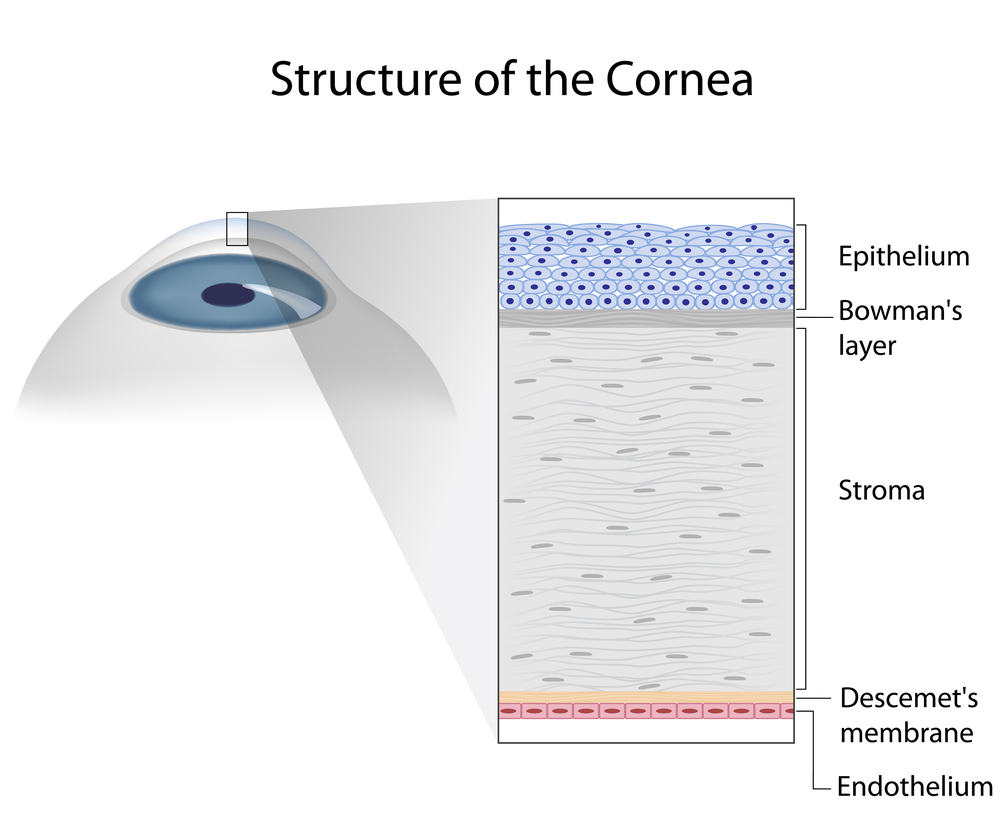
Epikeratophakia – a thin disk of donor cornea is sutured to the patient’s cornea after the patient’s epithelium (top layer) has been removed to add thickness.

Filaments – string or ribbon-like threads of epithelial cells and mucous that attach to the outer surface of the cornea.

Graft-host junction – where the donor cornea and patient’s cornea meet and are sutured.

Host tissue – cornea of the patient, the part of the patient’s cornea that is left in place when the central portion is removed to be replaced with the donor tissue.

Hydrops – a condition in which the back surface of a thin cornea ruptures, allowing fluid to waterlog the cornea, making it opaque instead of clear.

Keratic precipitates (KPs) – inflammatory cells that adhere to the innermost layer of the cornea and signal a rejection episode.

Kerato – (prefix) pertaining to the cornea

Keratometer – a device used to measure corneal curvature.
corneal structure
Keratomileusis – patient’s cornea is removed, frozen, reshaped on a computer assisted lathe- then returned to it’s original position.

Keratophakia – the surgical removal part of the surface of the cornea and its replacement with a donor cornea that is reshaped and transplanted to the patient’s cornea.

Keratoplasty – (corneal transplant) is the excision of all layers of the central portion of the cornea and replacement with a clear cornea from a human donor.

Lamellar Keratoplasty – (Non-Penetrating Keratoplasty) the outer two thirds of the cornea is removed and replaced with donor cornea.

LASIK – “laser assisted in situ keratomileusis.” It is a refractive surgery procedure for the correction vision in which a thin layer of the front of the cornea is lifted surgically and the underlying cornea is reshaped using an excimer laser. It is not a procedure applicable to keratoconus.

Penetrating Keratoplasty – (corneal transplant) full thickness layers of the cornea are replaced with a full thickness layer from a donor. The entire thickness of cornea is removed and replaced by full thickness donor corneal tissue.

Sutures – stitches, usually of a nylon material that are used to sew the new cornea tissue in place.

Trephine – a surgical instrument, a cutting tool, used to make a precise circular cut in tissue.

8/6/15


Cathy Warren, RNCatherine Warren, RN
Executive Director
National Keratoconus Foundation
A program of the Discovery Eye Foundation

The Emotional Toll of Keratoconus

The stories that people share about their vision loss help remind everyone not to take your vision for granted. The following article is from the Keratoconus Group Blog, and is used with their permission. It reveals the emotional toll of keratoconus, while trying to find the most comfortable treatment option that will allow you to see.

A New Lease on Life

My keratoconus story begins just as one major life event ended and another was just starting.

Rene and family -  emotional toll of keratoconus,
Rene Vasquez with his son Ernie and Wife Jennifer

I finished my dissertation and successfully defended it in June of 2007 then set off across the country with my then girlfriend (now wife) to start new jobs. Everything was on the upswing and all appeared normal. However, it had been about a year since my last visit to the optometrist and being in a new place, I had to go through the dubious task of finding one.

I ended up getting an appointment with the optometrist at our local Walmart as I had broken my only pair of glasses and needed a quick replacement. The visit was going normal (or so I thought) until he came back into the exam room after checking on something. It was with a grave expression that he told me that he noted some concerning findings and I should probably speak with someone who had more experience with keratoconus.

For the next hour or so, I was in a panic that I was going blind. That is until I got online to get more details on what this was all about. After reading into the late evening, a great many eye-related issues over the past several years suddenly made sense. I immediately recalled my many complaints about my night time driving becoming more bothersome because oncoming headlights were blinding. It was on the many forums where I first learned of the terms halos and ghosting, which I would become all too familiar with in subsequent years. Lastly, I had tried to switch from glasses to soft contact lenses roughly a year before my move and was not able to do it. I didn’t know it then but my left contact kept sliding off because of my enlarged cone. In retrospect, I still cannot fathom how my optometrist did not recognize the symptoms.

After a little research, I found a local optometrist who had experience with KC. He basically wanted to put me in RGP lenses and call it a day. This was a horrible experience and I will save everyone the gory details. Suffice it to say, I would stay in glasses until February of this year–nearly 7.5 years since my initial diagnosis.

Little by little I was becoming aware that my vision was getting worse. Night time driving was becoming near impossible, reading on the computer (which is a huge bulk of my job) was increasingly difficult and the photophobia was simply impossible to ignore–especially at stores and restaurants that used brutal florescent lighting. I did have tomography scans done yearly and thankfully the progression was slow, but it was still progression. Something had to change.

Vasquez family - emotional toll of keratoconus
Vasquez family at the beach

After leaving my optometrist for several philosophical reasons, I was able to find a group outside of my area, but still within driving distance, who were expert with patients with KC. It was there that I learned about scleral lenses and how they could be of benefit. My ophthalmologist and I also discussed cross-linking, but decided that since FDA approval is around the corner, we have the luxury of time to wait. However, he strongly encouraged me to switch to the scleral lenses.

I am ever thankful that he did. My life, in just a few short weeks, has been irrevocably changed. We are still working out the fine tuning, but the vision restored is unbelievable. I never thought I would see this well again. Overall, vision is 20/25 and I’ve also noted that my peripheral vision is back to normal. Also, and most thankfully, my night time vision and ability to drive safely have been restored. It is still unbelievable what these lenses have done for me and my overall quality of life.

There is the old cliché that you don’t know what you have until it is lost. I am still amazed how I didn’t truly realize how bad my vision had gotten until I got the sclerals. For those with KC and are on the fence as to how best to deal with it, please don’t hesitate to talk with your doctor to find the best solution for you.

7/30/15

Rene Vasquez - emotional toll of keratoconusRene Vasquez
Keratoconus Advocate