
Hadley’s Online Education for the Blind and Visually Impaired

12/4/14

The Hadley School for the Blind (www.hadley.edu) is the world’s largest educator of people who are blind or visually impaired as well as the world’s largest Braille educator. The school’s curriculum has always been delivered completely through online education, meaning students can study from anywhere at any time. Hadley serves nearly 10,000 students in all 50 states and approximately 100 countries. Hadley serves adult students, age 14 and over. Our mission is to promote independent living through lifelong, distance education programs for individuals who are blind or visually impaired, their families and blindness service providers.
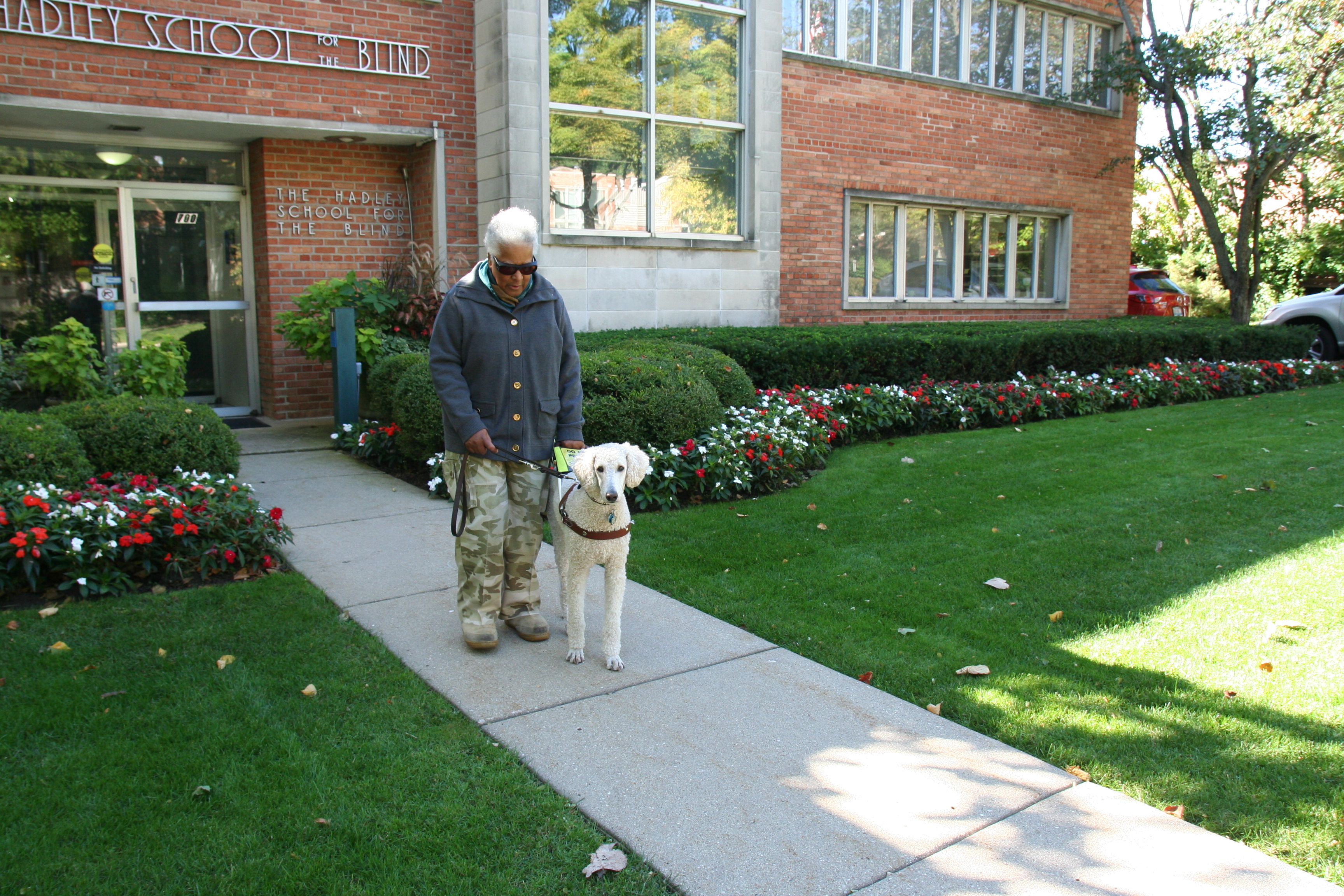
Hadley School
Hadley courses are tuition-free for people who are blind or visually impaired and their family members; there is modest tuition for professionals. Students study at their own pace and receive personalized, one-on-one instruction from their instructor by phone, email, virtual “office hours” or mail.

Students can take courses in four formats: large print, Braille, audio or online. Since we began offering courses in an online format in 2002 as part of our eHadley initiative, more than 13,000 students have completed one or more online courses. 89 of our approximately 100 courses are offered in an online format, and 20 new online courses were introduced in 2014. Most of our online courses also are now accessible on mobile devices, so that students can literally study on the go if they choose.

If you’re not familiar with blindness, you may be asking yourself how a blind person can take courses online. The answer is through adaptive technology, such as screen magnifiers or screen readers. A screen reader is a software application that converts text on a screen to speech. One of the most popular is called JAWS. If a student doesn’t know how to use a screen reader, Hadley has a series of courses to teach them how to use this technology!

While many students come to us to learn to read and write Braille, we offer much more than just Braille education. In addition to Braille, some of our most popular areas of study include access technology, independent living skills, employment skills and recreation. These courses fall within Hadley’s Adult Continuing Education Program, which represents the largest number of students at Hadley. Some examples of ACE courses include:

Independent Living Series: This series of two-lesson courses focuses on a variety of topics central to the tasks of daily living. When individuals lose their sight, it can be overwhelming. They must relearn key daily living skills, such as cooking, dressing themselves and getting around. These courses give our students the tools they need to retain their independence and lead productive lives. The individual course topics include: orientation and mobility basics; clothing care and dressing confidently; socializing and dining; and cooking.

Self-Esteem and Adjusting with Blindness: Whether a student was born visually impaired or lost vision later in life, this course will help them understand the adjustment to life’s demands. Maintaining self-esteem with the changes and adaptations that come with blindness are discussed in-depth and illustrated with quotes from many blind persons.

Human Eye 1 and 2: These courses explain the parts of the human eye, how it works and how corrective lenses work. They enable the student to describe the basic anatomy, routine examination procedures and some common conditions of the human eye. Hadley also offers courses on some of the specific conditions that can lead to vision impairment, including: macular degeneration, diabetes and glaucoma. These courses are designed to help students living with these conditions to better understand them and how to manage them.

Developing Your Technology Toolkit: Technology plays a significant role in how people interact with each other, and most will likely encounter some aspect of technology in their everyday life. This course presents a variety of prominent desktop and mobile solutions. It also discusses how adaptive technology solutions provide access to mainstream hardware and software. In addition, it focuses on proprietary, adaptive technology products designed to be used specifically by persons who are visually impaired.

Enjoying Bird Songs: Listening to birdsongs helps people reduce stress, improve cognition and memory, interact with nature and even have spiritual experiences. This course guides students through the many bird songs presented in Hadley student John Neville’s audio CD set Beginner’s Guide to Bird Songs of North America. This course helps students become able to appreciate nature and birdsongs, as well as reflect on their experiences with birdsong.

Also part of the ACE program is the Forsythe Center for Employment and Entrepreneurship (FCE), designed to address the 70 – 80% un- and underemployment rate among people who are blind or visually impaired. The FCE is not an academic, college-level business program, but instead was designed to provide the requisite computer training; relevant social security, tax, accounting, legal, marketing, management and communications information; and content specific to the needs and concerns of visually impaired individuals who want to launch and grown their own businesses. All FCE courses are online, and many are just one-lesson modules, which makes learning quick and easy. Some examples of modules include: The Marketing Plan, The Business Plan, Forms of Ownership and Networking Skills.

Since the 1930s, The Hadley School for the Blind also has offered a nationally-recognized, accredited High School Program, available to students with visual impairments age 14 and up who live in the United States. Students may transfer credits from courses taken at Hadley to their high school to graduate locally. Students may also earn their high school diploma directly through Hadley. Frustration with local schools not offering quality vision services or accessible formats, difficulties passing the state-required exit exam for graduation or inability to travel long distances have prevented many of our students from earning their diploma in the past, so the Hadley High School Program is a much-needed “second chance.”

Courses are supplemented by Seminars@Hadley, free 60 to 90-minute webinars that are available to the public. These seminars are designed to bring together our blind and visually impaired students from around the world to discuss various topics in a virtual conference room with a panel, moderator and guest speakers. Participants listen to the seminar from their computer and post questions electronically. They also ask questions and/or make comments using a microphone. Seminar topics are timely, practical and determined by what our students tell us they need. Some of our most popular seminars include: Learning to Put the “You” in YouTube, Simplifying Internet Searching and Crafting with Vision Loss. Some seminars are approved for Continuing Education Credits (CEUs).

Hadley also offer a series of instructional videos on YouTube called iFocus (www.youtube.com/hadleyschool). These videos explain how to use the vision accessibility features on iDevices (Apple products such as the iPhone and iPad). Each video focuses on a specific task on iDevices, such as sending a text message or creating a calendar event . There are now 25 videos in the series, and they have been viewed nearly 10,000 times!

For more information about Hadley or to enroll, visit our website at www.hadley.edu, call our Student Services Department at 800-526-9909 or send an email to student_services@hadley.edu.

Kate Streit Hadley SchoolKate Streit
Media and Marketing Specialist
The Hadley School for the Blind
Adjustments Can Help With Depression

11/25/14

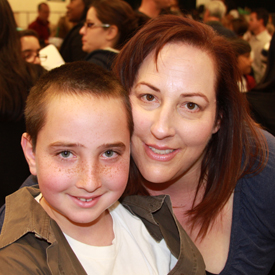
Eye disease can lead to isolation and depression. But making some adjustments can help with the depression. Robin Heinz Bratslavsky (pictured below with her oldest son) was diagnosed with keratoconus (KC) 20 years ago at age 25. Now a mother of two who works from home as a freelance editor. She participates in NKCF’s KC-Link.
Robin Bratslavsky
When I was diagnosed with KC, I was an editor at a major women’s magazine. The diagnosis didn’t mean much to me at the time. Things changed when I was fitted with RGPs. I had limited wear time and pain, and I started to feel anxious about my career. There were times I had to leave work early and drive to my eye specialist — several times a week. As a young editor in a highly competitive field, I was concerned these absences would interfere with my ability to move up at the magazine.

When I had my first child, my husband and I decided I would stay home with him and work on a freelance basis. I’ve been doing this for 14 years now. Through a series of corneal abrasions, infections and lens-tolerance issues, I have had to rely heavily on my husband and family and friends to drive me and my children when my eyes would not cooperate. I have had moments of extreme despair, because I am not used to being so dependent. My husband works incredibly long hours, and he used to travel a lot. I was always worried I would not be able to drive my children in an emergency.

As my KC has progressed, I have moments in which my normally well-controlled clinical depression manifests, and I feel helpless because of my vision limitations. My sons are both avid soccer players, and I miss a lot of their on-field accomplishments, because I simply cannot see well enough.

At this point, I wear Kerasoft lenses, and I have had Intacs placed in my right eye. My vision, corrected, is about 20/30, but that can vary from day to day. After 20 years, it appears my KC is stabilizing, so I have a pair of emergency glasses; they get me to approximately 20/60, so I can’t drive, but I can function somewhat around my house to give my eyes a break. I’ve been living with KC for a long time; it’s a manageable disease — as long as you are willing to make some adjustments.

BratslavskyRobin Heinz Bratslavsky
Keratoconus Advocate

For Book Lovers – Low Vision Magnifiers

11/13/14

The first of this month was Book Lover’s Day, and as an avid reader, I am willing to celebrate any day that is about reading. However, if you suffer from low vision due to age-related macular degeneration, cataracts, retinitis pigmentosa or other sight-threatening eye diseases, you may not be able enjoy reading as much as you used to.

There are several options to help you enjoy books again, including low vision magnifiers, e-books and tablets. We will provide you with a quick primer to help you select the best option for your lifestyle and budget. Today we will look at magnifiers and Tuesday we will explore e-readers and tablets.

Optelec ClearView low vision magnifiers
Optelec ClearView Magnifier

Low Vision Magnifiers

There are several general classifications for magnifiers –

• Hand-held magnifiers – These are smaller and more portable, allowing you to read thins such as menus, price tags, prescription bottles and ingredients in addition to books. Some also come with built-in lighting that can help you see in low light situations. They can be as simple as a single glass lens to more advanced digital devices that can auto-focus, change text color and magnification or even let you snap a picture of what you are reading if steady hands are an issue. However, because of these are small enough to make them portable, the field of vision is small and reading books for any length of time might become tedious.

• Stand magnifiers – These are really better for reading books, magazines and newspapers as the field of vision is larger, your hands will not get tired holding the device and the distance between the page and the magnifier will remain more constant, making reading easier. This is especially important if you have tremors. However, these require sitting at a desk or table to be used.

• Magnifiers mounted on reading glasses – These are great for being “hands-free,” but they also limit your ability to see at varying distances, and are generally used for seeing things less than a foot from your nose.

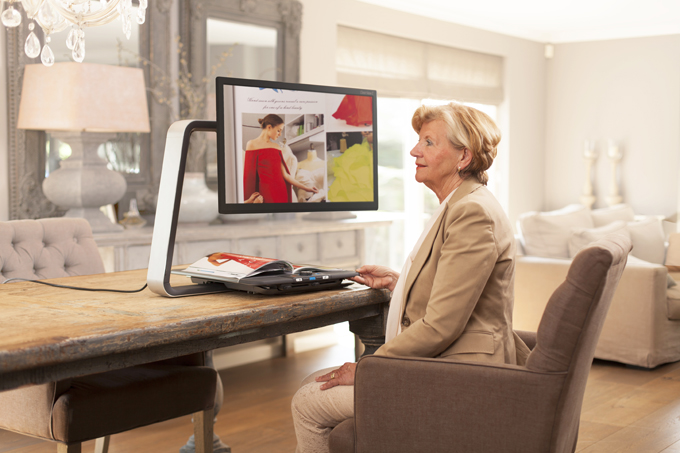
• Video magnifiers – These devices use a video camera (similar to the portable digital device listed above) that focuses on the page and then magnifies it for viewing on a screen or monitor. Text color/background, brightness, contrast and levels of magnification can be adjusted as needed. As with the stand magnifiers, the ones able to scan an entire page of a book need to be used at a desk or table. However, now there are some machines that will even read out loud to you!

To get an idea of the range of devices available, along with the wide range of prices, here are three websites to get you started – Enhanced Vision, Optelec and Humanware.

Because each person has a different vision issue, not one magnifier works for everyone. A person with central vision loss from age-related macular degeneration will have different needs from a person with peripheral vision loss from glaucoma. That is why we suggest that you consult with a low vision specialist to help guide you in selecting the correct device for your specific needs.

Check back on Tuesday, or subscribe to the DEF blog, to learn about e-reader and tablet options for people with low vision.

Susan DeRemerSusan DeRemer, CFRE
Vice President of Development
Discovery Eye Foundation

Night Blindness

10/28/14

As the number of daylight hours decrease and daylight savings time is about to end, many of us feel that the days are getting much shorter. If you suffer from night blindness, your days are shorter, because getting around or driving at night, are sometimes impossible.

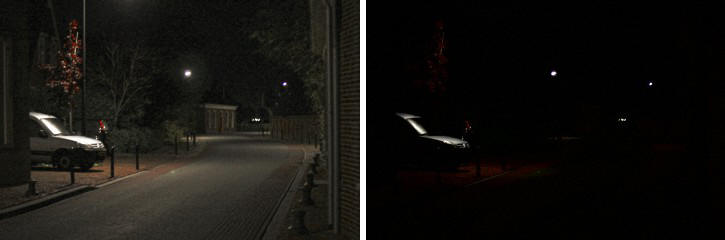
Night blindness is a condition that makes it difficult for a person to see in low-light situations or at night. Some types are treatable, while others are not. You will need to consult your eye doctor to determine the underlying cause of your night blindness to determine what can or cannot be done.

night blindness
Courtesy of wikipedia
There are several things that could cause night blindness:
•Cataracts
•Genetic eye disease
•Vitamin A deficiency
•Diabetes
•Aging eye
•Sunlight exposure

Here is a brief look at each.
Cataracts – This is when the lens of the eye becomes gradually becomes clouded, reducing vision. Besides reducing vision at night you may also experience halos around lights. This is a treatable condition requiring cataract surgery and replacing your clouded lens with a clear artificial lens. Your vision should improve considerably.

Genetic Eye Disease – Both retinitis pigmentosa or Usher syndrome are progressive genetic eye diseases where the rods that regulate light, and cones that control color perception and detail die. Progressive night blindness is one of the first visual symptoms of these two diseases. Currently there is no treatment for them as there is no way to treat or replace the dying rods.

Vitamin A Deficiency – While rare in the US, it can be a result of other diseases or conditions such as Crohn’s disease, celiac disease, cystic fibrosis or problems with the pancreas. Options to help with the deficiency include vitamin supplements suggested by your doctor, or increasing your intake of orange, yellow or green leafy vegetables.

Diabetes – People with diabetes are at higher risk for night vision problems because of the damage to the blood vessels and nerves in the resulting in diabetic retinopathy. Not only can it cause poor night vision, it may also take longer to see normally after coming indoors from bright light outside. There is no cure, but controlling blood sugar levels with medicine and diet can help prevent developing retinopathy or help slow the progression.

Aging Eye – As we age several things happen to our eyes. Our iris, which regulates the amount of light going into the eye, gets weaker and less responsive. This can make adapting from light to dark more difficult and slower. Our pupils shrink slightly allowing less light into the eye. The lens of the eye becomes cloudier, as explained above in cataracts, limiting the amount of light into the eye. We also have fewer rods for light perception. Aside from cataract surgery there is no treatment for age-related night blindness. However, eating a diet rich in fruits and vegetables and low in saturated fat is the best way to slow the progression. Here is more information on how the aging eye is affected.

Sunlight Exposure – If your night vision seems temporarily worse after a trip to the beach or a day on the ski slopes, it probably is. Sustained bright sunlight can impair your vision, especially if you fail to wear sunglasses or goggles.

Night blindness due to genetic conditions or aging cannot be prevented. However if you protect your eyes from extreme sunlight, eat a healthy diet, and monitor blood sugar levels if needed, you can reduce your chances for night blindness.

As we head into the holiday season, you should know that some great sources of vitamin A include sweet potatoes, butternut squash and … pumpkins!

Susan DeRemerSusan DeRemer, CFRE
Vice President of Development

Living With KC Isn’t Easy

10/23/14

The Discovery Eye Foundation Fall 2014 e-newsletter focused on depression and eye disease. At the time we asked for people that were willing to share their stories. Jennifer Villeneuve is one of the many that responded. She is 26 years old and lives in Ontario, Canada. A participant in KC-Link, she talks about the emotional toll keratoconus has taken on her life and living with KC.
Villeneuve with child - living with KC
At age 13, I was diagnosed with keratoconus and given RGP lenses, with which I struggled intensely. ?I became very quiet, and my bubbly personality disappeared. The lenses often got irritated and made my eyes water and turn red, which made me look like I was crying. My doctor didn’t really give me much information on the disease. He just told me my corneas were the shape of footballs instead of circles.

I couldn’t be a normal teenager. I often squinted and had red eyes, which made me very self-conscious. I couldn’t wear makeup or have a free-for-all teenage life. I had to worry about my lenses and what people saw when they looked at me. Some people knew about my KC, but not many. I was just that quiet person who squinted. Because of this, my self-esteem got very low. All in all, my high-school life was hell.

Every time I went to the doctor, he said my pain is normal, the discomfort is typical, and I needed to get used to it. I was also diagnosed with two learning disabilities, in addition to my vision impairment. Throughout high school, I had major anxiety and depression, though I never wanted to admit it. A close teacher even spoke to my mom about the anxiety and low self-esteem. I got through high school, still with the depression being untreated — and still with the same doctor who never even sent me for a topography scan. Each time I went in, it was, “Yup your eyes the same; see ya.”

In college, I was diagnosed with depression and anxiety and was finally getting treated. ?I also went to the University of Ottawa Eye Institute of The Ottawa Hospital in Ontario, Canada. They did topographic scans; my KC had gotten significantly worse. My contacts’ sizing changed twice that year. Again, I couldn’t be normal. College students go out partying, but not me. I stayed in my room by myself. I worried whether I could see enough to go out. What if I drank too much and lost a lens? It wasn’t worth the risk, especially given how expensive they are. In college, I got great help and acceptance. My teachers all knew about my KC, and I was set up with the Centre for Students with Disabilities at Algonquin College in Ottawa. They were my backbone and my support.
Villeneuve with 2 children - living with KC
After my two years in college, I moved on to my career working with children. At each job, I had to explain why I always had a mirror and my contact stuff. At first, I was ashamed and almost embarrassed, explaining why I squinted and that I may not be able to read a kids’ book if the writing is too small. Not only did I get accepted by coworkers, but also by the kids. They knew my eyes were red from my contacts or that my tears meant something was in my eye. I began working in with special-needs children, which was incredible but also challenging — especially in ensuring my eyes were at their best.

At this same time, my vision had gotten worse. I went for corneal crosslinking (CXL) in one eye. I had to take? time off from work, which caused a lot of stress. Unfortunately, there were complications from the CXL. I had a scar in the same eye that caused the crosslinking to be difficult and not as successful. When it came time to do my other eye, I was hesitant, but I needed it. It worked, and the disease slowed down.

A year or so later, the disease had a spike and caused my eye to rub on a lens and make a blister. I had laser surgery to get rid of that and the scar, too. Because KC isn’t covered by insurance in Ontario, I had to pay for every lens, every $11 bottle of solution and countless eye drops. It was expensive, and money was a struggle. I still struggle with the costs of things.

I also have to worry about eye infections. Since I work with kids, they are easy to get, but if I get an eye infection, I can’t wear my contacts, which means no driving, which means no working, which means no money. Things can snowball so quickly.

My vision is up and down. My lenses don’t last as long in my eyes as they used to, and my nighttime vision can be scary. I have to be extra-vigilant. Again, I can’t be normal or go somewhere unfamiliar at night. I’m always concerned. My lens fitter recently recommended scleral lenses, but I can’t afford them. I barely could afford the $2,000 for the CXL.

Living with KC isn’t easy. I can’t help but wonder how long I’ll have the vision I have now. Am I going to be blind in a few years? If I have children, will they have this, or will I even be able to see them? Will I find a guy who would want someone with the possibility of losing vision? I have to stop myself from thinking ahead, or the anxiety gets the best of me.

Janet Villeneuve - living with KCJennifer Villeneuve
Keratoconus Advocate

20 Tips For Cooking With Low Vision

10/21/14

People cook for different reasons. Some just so they can eat, others enjoy the creativity and find it relaxing and for some it is a activity they have fun doing with others. But cooking can become difficult and dangerous as you lose your vision. Here are some useful tips to help keep you safe and give you confidence to enjoy cooking with low vision.

Cooking with low vision
1. To avoid burns, place a pot or pan on the burner before turning it on and, turn the burner off before removing the pot or pan.

2. Turn pan handles inward from the stove or counter to avoid spills and burns.

3. Mark common or often used settings on appliances with bright nail polish, bright colored tape, or raised dots.

4. Purchase a microwave with a sensor reheat feature to automatically reheat food to the proper temperature.

5. Use long oven mitts to protect your hands and arms from hot surfaces.

6. Turn on the oven light while using it to remind you the oven is on.

7. Use a double spatula to help avoid spills when turning food.

8. Use a special measuring cup that enhances contrast.

9. Use a knife with an adjustable slicing guide.

10. Have light and dark cutting boards to be able to provide the most contrast depending on what you are slicing or chopping – such as black for slicing onions and white for chopping kale.

11. Use a large print, low-vision kitchen timer.

12. Use an automated coffee maker that makes a single cup of coffee or tea to eliminate the need to pour boiling liquids and risk burns.

13. Attach low-glare fluorescent lighting to the underside of cabinets to make it easier to see.

14. Outline the end of countertops with colored duct tape, or paint in a color that contrasts with the work surface. Also choose kitchenware that contrast with the countertop.

15. Organize shelves in a logical way, possibly alphabetically, with most use items easily accessible. Be sure to return items to where they were originally.

16. Use a color for the interior of cupboards that contrasts with your dishes to make them easier to see. Do not use clear glasses or dishes as they appear invisible.

17. If you have glaucoma and experience tunnel vision, remove cabinet doors or replace with sliding doors.

18. Place rubber bands around the milk carton to distinguish it from the orange juice carton. This also works well with distinguishing a can of chicken noodle soup from tomato, etc.

19. Avoid overflows by hooking a “liquid Level” indicator to your glass or cup that will play a tune when you are ¾” from the top.

20. For cold drinks you can also use your finger by placing the tip of it over the edge of the glass and stop pouring when you feel the liquid.

Once you have prepared your food, eating can also be a challenge, so here are five bonus tips.

1. Use dinner plates with a raised lip to avoid spills or pushing the food off while eating.

2. Avoid patterns on dinnerware.

3. Make sure your dishes contrast with the table or table linens.

4. Have a system for putting food on your plate such as meat at 6:00, vegetables at 3:00 and starches at 9:00.

5. Use a gooseneck lamp directly over you plate.

Susan DeRemerSusan DeRemer, CFRE
Vice President of Development

Being A Blind Artist

10/14/14

One thing that was always nurtured in me as a child was art. My father was an architect, and my mother is an art-lover. I remember they would collect all my artwork from preschool and elementary school. I used to have trouble sleeping as a kid, so I started drawing on the wall next to my bed; it would comfort me until I fell asleep. Most parents would probably scold a kid for drawing on the wall, but my parents loved it! In fact, my father would bring his architect friends into the room to “see my daughter’s mural.” Art has always been one area where I don’t feel inadequate. Art is so subjective, and anything can be art, so there is no judgment, and it’s very liberating. I’ve done abstract painting, mosaic tile work, ceramics and, currently, sculpture.

Becoming a Blind Artist

When I became blind, maybe five or six years in, I started going to Braille Institute, and I rediscovered art as a blind person. I saw people there creating art, and I thought, “This is amazing.”
Kooshay scuplture - blind artist
I always wanted to learn how to sculpt, but every time I called art schools about classes, when I told them I’m blind, they told me I had to take private lessons. Fear came up, and they did not know where to put me. Finally, two years ago, I started taking private lessons. My first piece was a portrait of a man, and the school was so amazed, they not only offered to put me in the sculpting class, but they gave me a full scholarship.

My private-lesson teacher wasn’t even a sculptor; she was a painter, but she was so tickled by the idea of a blind person wanting to sculpt that she wanted to be involved. She was a true artist and wanted to try something new. It was a wonderful experience for both of us. My second teacher would blindfold herself to figure out how to teach me. She really went out of her way, and I learned some really great techniques. I started my current class, which is a figure-sculpting class, by sculpting shoes — I have a shoe fetish — but I starting getting jealous of everyone else sculpting figures. I can’t touch the naked models, so now I touch other people’s sculptures and use that as a study to make my own.

I love it. I love the feel of clay. I’m a very tactile person, and I love the sensation of it in my hands. It’s so malleable. I use my hands more than sighted people; I don’t really use tools. I need to feel the clay to shape it, and I think there’s more emotion involved for me. It’s me, the piece and nothing else. Maybe it’s because I can’t see it — it’s like a meditation for me. I get lost in my piece. There is so much emotion — that’s where I get my inspiration. It’s a way to fantasize or fulfill an emotion or need. For me, it’s more about the process — I don’t see the finished product. It’s a very fulfilling way of expressing myself that words can’t; it’s more about expressing what I feel.

Kooshay Malek - seeingKooshay Malek
Marriage and Family Therapist
Los Angeles

Our First Three Months Of Eye Care

9/30/14

Discovery Eye Foundation Blog’s First Three Months

It is hard to believe, but this blog has been providing information and insights into eye disease, treatment options, personal experiences of living with vision loss, and other eye-related information for seven months.

All of this would not have been possible without the expertise of remarkable eye care professionals who took time out of their busy schedules to share information to help you cope with vision loss through a better understanding of your eye condition and practical tips. Since so much information was shared in the seven months, here is a look at the first three months, with the additional four months to be reviewed next Tuesday.
Thank You - first three months
I am very thankful to these caring eye professionals and those with vision loss who were willing to share their stories:

Marjan Farid, MD – corneal transplants and new hope for corneal scarring

Bill Takeshita, OD, FAAO, FCOVD – proper lighting to get the most out of your vision and reduce eyestrain

Maureen A. Duffy, CVRT – low vision resources

M. Cristina Kenney, MD, PhD – the differences in the immune system of a person with age-related macular degeneration

Bezalel Schendowich, OD – blinking and dealing with eyestrain

Jason Marsack, PhD – using wavefront technology with custom contact lenses

S. Barry Eiden, OD, FAAO – contact lens fitting for keratoconus

Arthur B. Epstein, OD, FAAO – dry eye and tear dysfunction

Jeffrey Sonsino, OD, FAAO – using OCT to evaluate contact lenses

Lylas G. Mogk, MD – Charles Bonnet Syndrome

Dean Lloyd, Esq – living with the Argus II

Gil Johnson – employment for seniors with aging eyes

We would like to extend our thanks to these eye care professionals, and to you, the reader, for helping to make this blog a success. Please subscribe to the blog and share it with your family, friends and doctors.

Susan DeRemerSusan DeRemer, CFRE
Vice President of Development
Discovery Eye Foundation

Seeing the whole picture: My life after a telescope implant

9/11/14

I’ve lived with my family in Schenectady, NY (outside of Albany) for more than 50 years and I love my home because it’s within walking distance of my grocery store, bank and church. But ten years ago, my vision was severely impacted because of age-related macular degeneration.

Patty and Linda - telescope implant
Patty (on right) and friend Linda have some fun

My children had to help me so much because I just couldn’t see. For example, they had to drive me to the doctor and on errands. I needed help shopping because I couldn’t read labels. After a while, it was very depressing. I started to avoid social situations, like at family parties and church events, because I was embarrassed that I couldn’t recognize faces any longer. I felt terrible about this. I sat and cried every now and then.

But then my doctor told me about a treatment I wasn’t yet aware of called the telescope implant. The device is very small (the size of a pea), and it is implanted in one eye to restore vision. My doctor explained that it works like a real telescope in that it magnifies images, which reduces the blind spot that blocked my straight-ahead vision. The other eye does not get an implant because you need to keep some peripheral vision to help with orientation and balance. This sounded like science fiction! But I wanted to see if it could help me and decided to take a chance on the procedure.

I worked with an entire team of specialists, which were part of a treatment program called CentraSight. My retina doctor, cornea surgeon, low vision optometrist and a low vision occupational therapist all counseled me about what to expect from the outpatient procedure, particularly afterwards. For example, I learned there was a significant amount of occupational therapy required to adjust and become proficient at using my new vision. I also was warned that my sight would not be like it was in my youth, I wouldn’t be able to do everything I used to nor would I be able to see, differently, the minute I opened my eyes.

I had my surgery in February 2013. The cost for the telescope implant and visits associated with the treatment program were covered by Medicare, which was very helpful.

Thinking back, I was nervous on surgery day, but shortly after the procedure, I was back with my family and going out to dinner. The most amazing part is that I was able to see my daughter’s face almost immediately, despite not expecting to see anything right away. It was such a gift! After the surgery, I worked with the low vision specialists for about three months. The exercises varied because you use different techniques to see things when you are standing, sitting or moving around.

It’s been more than a year since my surgery and I am very happy, mostly because I can do so much more now that I can see better. I can read, sew, do canning and work in my garden. I can see the crosswalks, which lets me walk to the grocery store safely. But most importantly, I can see my family and friends. I’m enjoying spending time with the people I care about. I would recommend that people learn more about the telescope implant. There are CentraSight teams all over the country. When you call 877-99-SIGHT or visit www.CentraSight.com a trained CentraSight Information Specialist will point you to the team closest to your home and can even help schedule the appointments for you. The telescope implant isn’t for everyone, but it can make such a difference in your life.

Patty Gadjewski - telescope implantPatty Gadjewski
Schenectady, NY

I See You

8/12/14

This is the second article from Kooshay Malek, a blind therapist in Los Angeles. Her first article, The Habit of Seeing, discussed losing her vision and her choice of becoming a marriage and family therapist. Here she discusses at how she uses her vision loss to help her patients.

When I started as a therapist, I was really concerned about my blindness. I had faced prejudice in other jobs. With my first few clients, I gave them this whole spiel at the beginning, explaining about being blind and about why I wear dark glasses.Therapy cloud - blind therapist My supervisor said not to work so hard to explain. He thought it was a nonissue: “If you were blonde and blue-eyed, would you be describing that over the phone to them?” he asked. He was right. It didn’t faze most people. In the 11 years I’ve been practicing, only a few people had a problem with it. To this day, once in a while, it may come out organically that I’m blind. Most of the time, I don’t tell them beforehand.

I think I pick up on certain nuances sighted therapists may miss. I sense shifts in energy in the room. I have very strong attunements: I notice the slightest change in tone of voice — or even in their silences — and I know something’s going on. If necessary, we talk about my blindness, and we process my blindness in the session. I don’t leave it as an elephant in the room. The main concern of everybody who comes to therapy, whether they are seeing a blind person or not, is, “Am I going to be heard and understood?” In this case, they may wonder if my blindness will affect whether I can hear and understand them. I say: “Well, we’ll have to wait and see. If there is something you think I can’t understand, would you be able to tell me?” That makes them self-sufficient in asking for help or expressing a need. Many patients tell me they find it so much easier to talk to me, because I don’t have my eye on them, so to speak, like a microscope. They find it close to the traditional psychoanalyst’s couch, where the therapist would sit behind them and not look at their face. They find out I see them better than anyone else in their life. That’s the reward of it. Especially with clients who have self-image and self-esteem issues. I get to see who is inside, not who is outside, and that’s powerful by itself. People open up more easily. My blindness is a really quiet, subtle intervention in the room at all times. It’s always present. It’s a gift I carry in there with me, and I use it.

Kooshay Malek - seeingKooshay Malek
Marriage and Family Therapist
Los Angeles, CA