
11/13/14
The first of this month was Book Lover’s Day, and as an avid reader, I am willing to celebrate any day that is about reading. However, if you suffer from low vision due to age-related macular degeneration, cataracts, retinitis pigmentosa or other sight-threatening eye diseases, you may not be able enjoy reading as much as you used to.
There are several options to help you enjoy books again, including low vision magnifiers, e-books and tablets. We will provide you with a quick primer to help you select the best option for your lifestyle and budget. Today we will look at magnifiers and Tuesday we will explore e-readers and tablets.
Low Vision Magnifiers
There are several general classifications for magnifiers –
• Hand-held magnifiers – These are smaller and more portable, allowing you to read thins such as menus, price tags, prescription bottles and ingredients in addition to books. Some also come with built-in lighting that can help you see in low light situations. They can be as simple as a single glass lens to more advanced digital devices that can auto-focus, change text color and magnification or even let you snap a picture of what you are reading if steady hands are an issue. However, because of these are small enough to make them portable, the field of vision is small and reading books for any length of time might become tedious.
• Stand magnifiers – These are really better for reading books, magazines and newspapers as the field of vision is larger, your hands will not get tired holding the device and the distance between the page and the magnifier will remain more constant, making reading easier. This is especially important if you have tremors. However, these require sitting at a desk or table to be used.
• Magnifiers mounted on reading glasses – These are great for being “hands-free,” but they also limit your ability to see at varying distances, and are generally used for seeing things less than a foot from your nose.
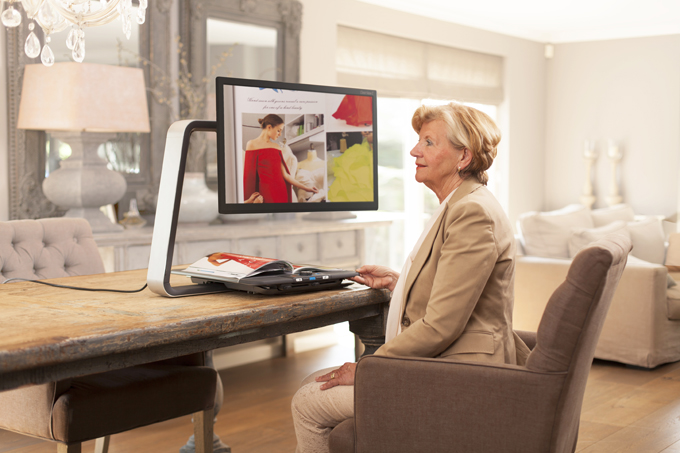
• Video magnifiers – These devices use a video camera (similar to the portable digital device listed above) that focuses on the page and then magnifies it for viewing on a screen or monitor. Text color/background, brightness, contrast and levels of magnification can be adjusted as needed. As with the stand magnifiers, the ones able to scan an entire page of a book need to be used at a desk or table. However, now there are some machines that will even read out loud to you!
To get an idea of the range of devices available, along with the wide range of prices, here are three websites to get you started – Enhanced Vision, Optelec and Humanware.
Because each person has a different vision issue, not one magnifier works for everyone. A person with central vision loss from age-related macular degeneration will have different needs from a person with peripheral vision loss from glaucoma. That is why we suggest that you consult with a low vision specialist to help guide you in selecting the correct device for your specific needs.
Check back on Tuesday, or subscribe to the DEF blog, to learn about e-reader and tablet options for people with low vision.
 Susan DeRemer, CFRE
Vice President of Development
Discovery Eye Foundation