

20 Facts About Eye Color and Blinking

7/15/14

Eye color is one of the first things a person notices about another person, but blinking is so automatic we rarely think about it. Here are some intriguing facts about eye color and blinking:

1. The world’s most common eye color is brown.

2. Brown eyes are actually blue underneath.

3. Melanin affects the color of your eyes so brown eyes have more melanin than blue eyes.

Person with different colored eyes - eye color and blinking
4. Heterochromia is when you are born with two differently colored eyes.

5. Blue-eyed people share a common ancestor with every other blue-eyed person in the world.

6. We blink more when we talk.

7. It is impossible to sneeze with your eye open.

8. The average person blinks 12 times per minute or about 10,000 blinks per day.

9. The eye is the fastest muscle in the body – in the blink of an eye. They are also the most active muscles in the body.

10. A blink usually lasts 100 to 150 milliseconds making it possible to blink five times in a second.

11. You blink less when you’re reading.

12. Infants blink 10 times less than adults.

13. One blink isn’t always the same as the next.

14. Our eyes close automatically to protect us from perceived dangers.

15. The older we are the less tears we produce.

16. Tears are made of three main components – fat, mucous and water. This is so tears won’t evaporate.

17. Your nose gets runny when you cry as the tears drain into your nasal passages.

18. You blink on average 4,200,000 times a year.

19. Tears kill bacteria because they contain lysozyme, a fluid that can kill 90 to 95 percent of all bacteria.

20. A newborn baby will cry, but not produce any tears. Babies do not produce tears until they are around six weeks old.

Susan DeRemerSusan DeRemer, CFRE
Vice President of Development
Discovery Eye Foundation
20 Facts About the Amazing Eye

6/10/14

We don’t often give our eyes as much thought as we should, that is until something goes wrong and our vision is affected. But when you learn more about eyes, you realize just how amazing they are. Here are a few facts you may enjoy:

1. Eyes began to develop 550 million years ago. The simplest eyes were patches of photoreceptor protein in single-celled animals.

2. Your eyes start to develop two weeks after you are conceived.
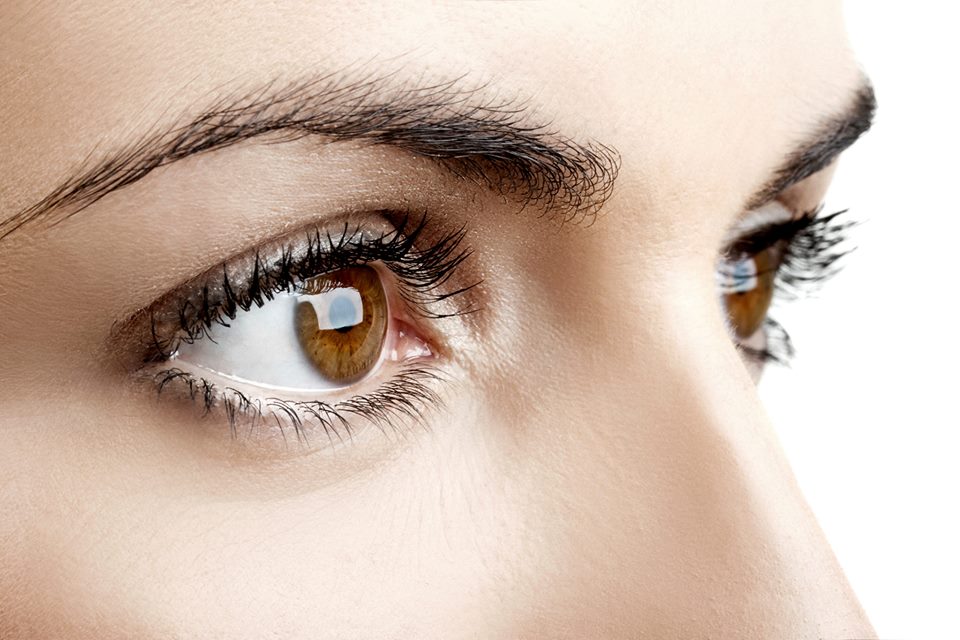
Brown eyes 6.10.14
3. The entire length of all the eyelashes shed by a human in their life is over 98 feet with each eye lash having a life span of about 5 months.

4. To protect our eyes they are positioned in a hollowed eye socket, while eyebrows prevent sweat dripping into your eyes and eyelashes keep dirt out of your eyes.

5. Your eyeballs stay the same size from birth to death, while your nose and ears continue to grow.

6. An eye is composed of more than 2 million working parts.

7. Only 1/6 of the human eyeball is exposed.

8. Corneas are the only tissues that don’t have blood.

9. The human eye weights approximately just under an ounce and is about an inch across.

10. An eye cannot be transplanted. More than 1 million nerve fibers connect each eye to the brain and currently we’re not able to reconstruct those connections.

11. 80% of our memories are determined by what we see.

12. Eyes heal quickly. With proper care, it takes only about 48 hours to repair a minor corneal scratch.

13. There are about 39 million people that are blind around the world.

14. 80% of vision problems worldwide are avoidable or even curable.

15. Humans and dogs are the only species known to seek visual cues from another individual’s eyes, and dogs only do this when interacting with humans.

16. A fingerprint has 40 unique characteristics, but an iris has 256, a reason retina scans are increasingly being used for security purposes.

17. People who are blind can see their dreams if they weren’t born blind.

18. “Red eye” occurs in photos because light from the flash bounces off the back of the eye. The choroid is located behind the retina and is rich in blood vessels, which make it appear red on film.

19. 80% of what we learn is through our eyes.

20. Eyes are the second most complex organ after the brain.


Susan DeRemerSusan DeRemer, CFRE
Vice President of Development
Discovery Eye Foundation