
What Are The Differences In The Immune System of An Age-related Macular Degeneration Patient?

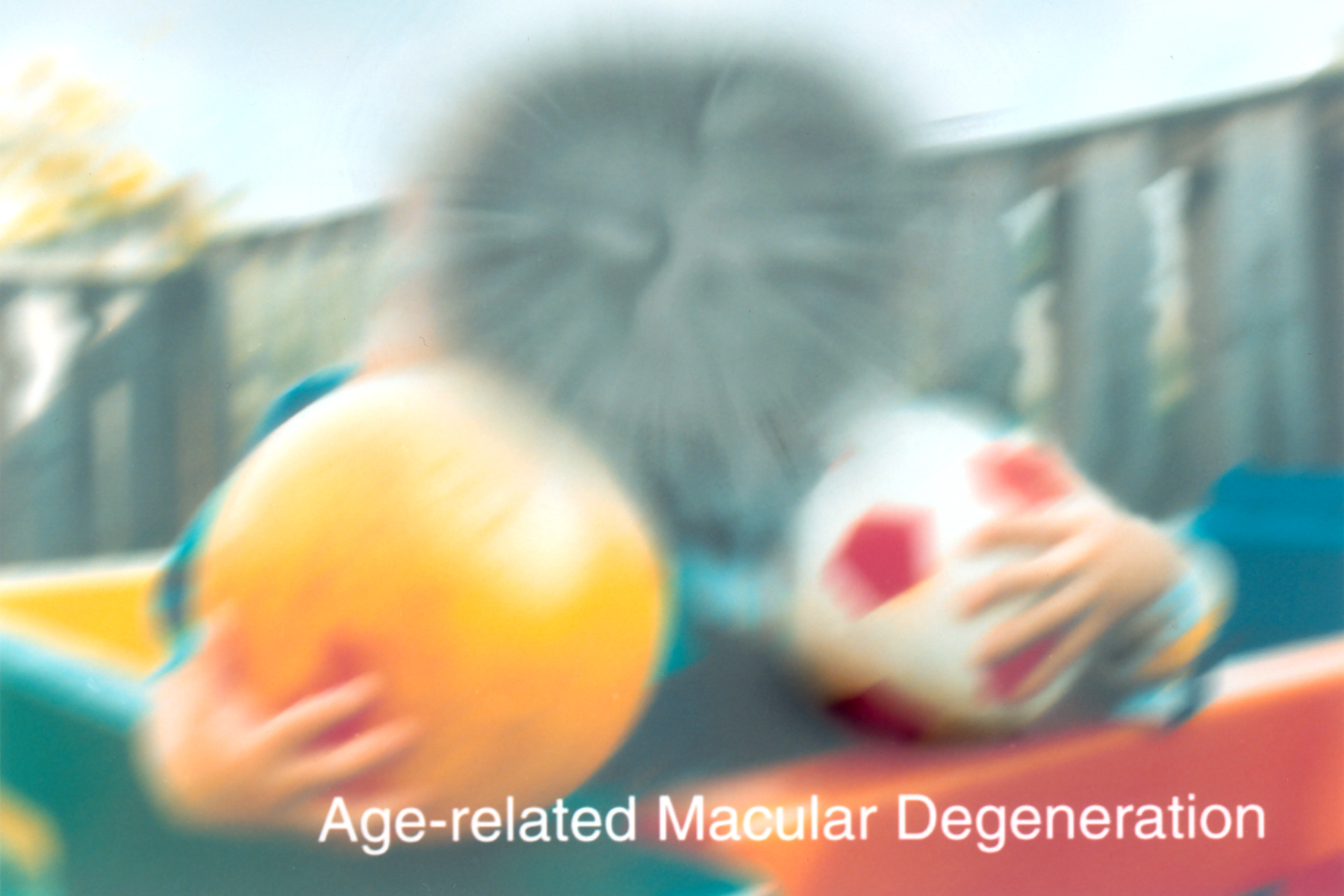
A symposium was held in Bethesda, Maryland at the National Institutes of Health on March 6, 2014.  The purpose was to bring together clinicians and researchers from a wide variety of background to discuss the recently discovered differences in the function of the immune system in patients with age-related macular degeneration (AMD) and how it relates to aging.  These differences are important to understand because they may lead to new therapeutic approaches to treat people which are high risk for AMD.

Courtesy of National Eye Institute, National Institutes of Health - immune system
Courtesy of National Eye Institute, National Institutes of Health

  • Three researchers associated with the Discovery Eye Foundation attended the one-day conference.  Cristina Kenney, MD, PhD, has worked in the field of AMD for over twelve years and is a leading expert on the genetics and molecular changes in the mitochondria as it related to the retinal cell death associated with AMD.
  • Lbachir BenMohamed, PhD, is an expert immunologist with a tremendous understanding of how the immune system responds to infections and stress.
  • Anthony Nesburn, MD, has been involved in AMD research at both the clinical and research levels.

By attending this meeting, all three researchers gained insight into the importance of the immune system with respect to maintaining a healthy retina and slowing the progression of AMD.

The highlights of the meeting were the following:

1.  Emily Chew, MD (National Eye Institute) reviewed the clinical aspects of the disease stressing that there are many stages of AMD.

The early stage of AMD is diagnosed based upon the medium-size drusen (about the width of an average human hair) that can be seen underneath the retina.  There may not be any visual changes in these patients.

The intermediate stage of AMD is when subjects have larger drusen and some degree of retinal pigment epithelial cell drop out.  These patients may not have vision loss or other symptoms.

The late stages of AMD which can be categorized into the dry form (geographic atrophy) which has significant loss of the retinal pigment epithelial cells and overlying photoreceptor cells.  Presently there in no treatment for this type of AMD.

These individuals can have changes that cause decreased vision.  The second form of late AMD is the wet form (neovascular), which has growth of abnormal blood vessels beneath the retina that can cause significant loss of vision.  The treatments for this type of AMD are anti-VEGF medications that block the growth of these vessels and help maintain good visual acuity.

2.  Anand Swaroop, PhD (National Eye Institute) reviewed the genetics of AMD and summarized the work of numerous laboratories.  It is now recognized that there are over 20 different genes associated with AMD.  These genes fall into the categories of those involved with Complement Activation, Cholesterol Pathway, Angiogenesis, Extracellular Matrix and Signaling Pathways.  Many of these genes have additive effects, meaning that if a patient has more than one high risk gene, then the likelihood of developing AMD increases.  While we have learned a lot about the genes that are important, we still do not have any gene therapies that can be used to treat AMD.

3.  Six different speakers presented their data related to animal models of AMD and it was agreed that there is not a “perfect” model because most of the animals do not have a macula, the region of the retina that is affected the most by AMD.  However, there is still a lot to be learned by using the models that we do have because if we can better understand the basic pathways involved, then we can block or modify the pathways to prevent the damage.

4.  Jayakrishna Ambati, PhD (University of Kentucky) presented data showing that there is a deficiency of an enzyme called DICER1 in the retinal pigment epithelial cells which leads to increased activation of inflammation via a protein complex called the inflammasome.  He described some of the signaling pathways which are involved in the inflammasome activation.  This is important because these pathways can become targets for treatment of the dry form of AMD.

5.  Jae Jin Chae, PhD (National Human Genome Research Institute) also talked about the role that inflammation plays in the development of AMD.  The data presented reviewed the pathways involved with activation of the inflammasomes which is the first step in a cascade of events that result in inflammatory diseases.  They have identified a calcium-sensing receptor (CASR) which triggers the activation of the NLRP3, a key component of the inflammasome.  Understanding how this series of events works allows researchers to develop medications to block or interfere with the pathway and therefore decrease the levels of inflammation.  

Dr. M. Cristina KenneyM. Cristina Kenney, MD, PhD
Professor and Director of Ophthalmology Research
School of Medicine, Dept. of Ophthalmology
University of California, Irvine

Low Vision Resources

What to do when “There’s nothing more that can be done.”

“I’m sorry, but there’s nothing more that can be done. There is no cure for your eye condition.”

In your work as healthcare professionals and health educators, it’s likely you’ve encountered a significant number of adults and older adults who have been on the receiving end of this devastating news.

When an eye care provider says, “There’s nothing more that can be done,” what he or she likely means is, “There’s nothing more I can do for you surgically.” But instead of saying, “There’s nothing more that I can do,” the discouraging message delivered to the patient is, “There’s nothing more that can be done.”

Thus, in many cases, the discussion ends there. Patients will either exhaust their resources searching for an elusive cure or become resigned to a life that is restricted and defined by incurable vision loss.

When receiving a diagnosis of vision loss, many adults who have managed to overcome a host of obstacles in their lives may now believe they are facing an obstacle with no viable solution. A natural, and understandable, initial reaction is to focus instead on the devastating losses that are seen as an inevitable accompaniment to blindness and low vision such as:

  • Loss of independence: “How will I prepare meals, clean my home, or shop? Will I become a burden to my family and friends?” 
  • Loss of confidence and self-worth: “All my life I’ve been physically active and self-reliant. Has my life as an independent person come to an end?” 
  • Loss of privacy: “I won’t be able to handle my finances independently. Will I have to surrender control of my life to someone else?” 
  • Loss of employment: “I’ll have to quit my job. How will I earn a living?” 

It’s important to let your clients and patients know that there is indeed hope—and life—after vision loss. A wide range of vision rehabilitation services enable adults who are blind or have low vision to continue living independently. The term “vision rehabilitation” includes highly trained professionals and comprehensive services that can restore function after vision loss, just as physical therapy restores function after a stroke or other injury.

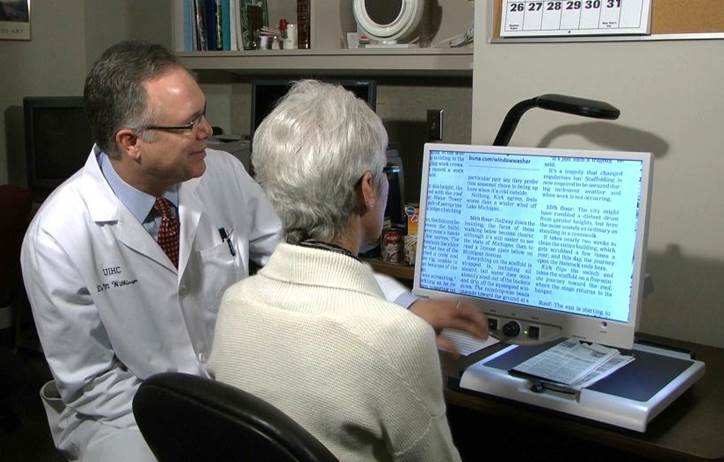
Patient working with a low vision therapist

Vision rehabilitation professionals include:

Additional vision rehabilitation services can include:

  • Peer support and counseling: talking with peers, sharing common concerns and frustrations, and finding solutions to vision-related problems. 
  • Vocational rehabilitation: vocational evaluation and training, job training, job modification and restructuring, and job placement. 
  • Veterans’ services: vision rehabilitation and related support services for blinded veterans of all ages. 

There are many resources available to help your patients and clients locate vision rehabilitation services. For example, the VisionAware Directory of Services allows you to browse by state and type of service, including counseling resources, support groups, low vision services, independent living skills, and orientation and mobility. The VisionAware “Getting Started” Kit provides tip sheets on specialized services and products that can assist with everyday life after vision loss.

The National Eye Institute’s National Eye Health Education Program (NEHEP) also has low vision education resources. The video, Living with Low Vision: Stories of Hope and Independence, explains how, as a health professional, you can help your patients make the most of their remaining vision and improve their quality of life by referring them for vision rehabilitation services. Share it with your colleagues, too. You can find additional resources and ideas for promoting vision rehabilitation on the NEHEP Low Vision Program page.


Maureen Duffy, CVRTMaureen A. Duffy, CVRT
Social Media Specialist, visionaware.org
Associate Editor, Journal of Visual Impairment & Blindness
Adjunct Faculty, Salus University/College of Education and Rehabilitation


Implantable Miniature Telescope Update

The Macular Degeneration Partnership, a program of the Discovery Eye Foundation,  has received numerous questions about the implantable miniature telescope (IMT) since it was approved by the FDA in 2010.

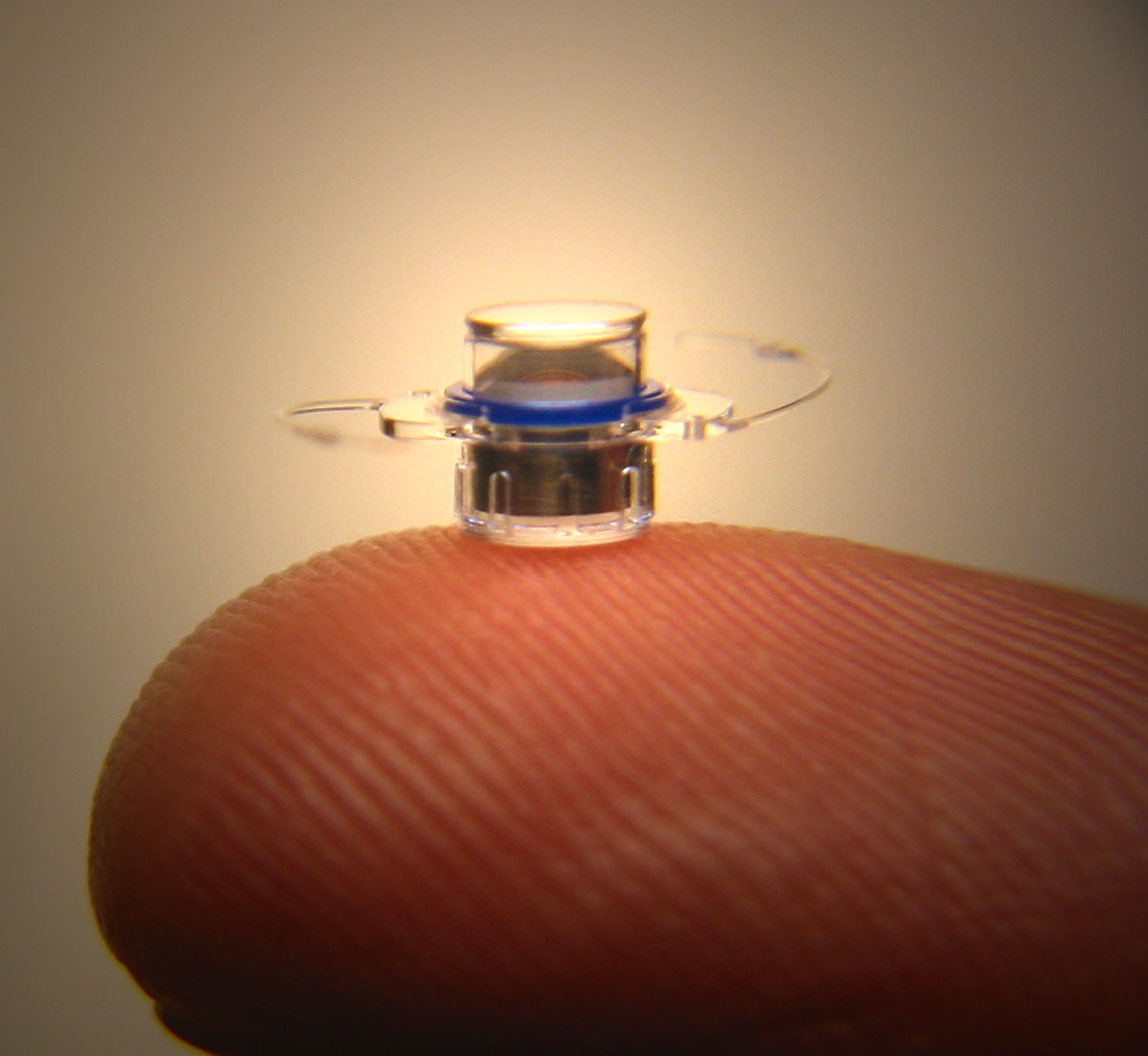
Implantable Miniature Telescope
The IMT is becoming more widely available now. The IMT is a tiny telescope implanted inside the eye that may benefit older adults with advanced AMD. Smaller than a pea, this device is proven to restore sight and quality of life in eligible candidates. Unfortunately, the inclusion criteria to be eligible for the device are narrow.  Most importantly, the IMT can only be implanted into an eye that has not had a cataract removed yet.   We encourage you to review the below information to see if you or a loved one might be a candidate for this procedure. Approximately 2 million Americans have advanced forms of AMD, which is the leading cause of blindness in people over the age of 65. When an individual has severe wet macular degeneration, or dry AMD with geographic atrophy, it is sometimes called “end-stage AMD”. Patients with end-stage AMD have a central blind spot or missing area in their vision. But, despite the availability of drug treatments that slow the progression of AMD, the number of people with end-stage AMD is expected to double by the year 2050.

Specifically, the telescope implant uses micro-optical technology to magnify images which would normally be seen in your “straight ahead,” or central, vision. The images are projected onto the healthy portion of the retina not affected by the disease, making it possible for patients to see straight ahead. The procedure is performed on one eye only, and involves removing the eye’s natural lens and replacing it with the tiny telescope implant. This is similar to the surgery performed to remove a cataract, which is a clouding of the natural lens. The other eye remains as is to preserve peripheral vision, which is important for balance and orientation. The surgery is done in an outpatient setting by a specially-trained ophthalmologist called a cornea/cataract surgeon. The telescope implant is FDA approved and available through Medicare.

Although the telescope implant is not a cure for AMD, studies showed that in general patients were able to see 3 to 4 lines better on the eye test chart and demonstrated improved quality of life on the National Eye Institute Visual Functioning Questionnaire. Two multi-year clinical studies enrolled over 225 patients to evaluate the safety and efficacy of the telescope implant used in the CentraSight treatment program.   To be considered a candidate for the telescope implant, an ophthalmologist must first confirm that you:

• Have irreversible, End-Stage AMD resulting from either dry or wet AMD
• Are no longer a candidate for drug treatment of your AMD
• Have not had cataract surgery in the eye in which the telescope will be implanted
• Meet age, vision, and cornea health requirements

Some people with end-stage AMD may not be a candidate for a telescope implant. Patients and their physicians will assess if the benefits of the procedure outweigh the potential risks to decide if this treatment option is right for them.

CentraSight is the program that guides people with end-stage AMD through the telescope implant evaluation, surgery and rehabilitation process.  While the out-patient procedure is quick, patients also must commit to a comprehensive occupational therapy program to learn how to use their new vision (and way of seeing) in daily life. Click here to watch a video that shows how the implantable telescope works.

“After surgery, one of the most important aspects of the telescope implant procedure is the rehabilitation,” said Dr. Marjan Farid, Associate Clinical Professor of Ophthalmology at the University of California-Irvine School of Medicine. “Specially trained optometrists and occupational therapists work with patients to teach them how to use their new vision because there are different techniques involved when you are sitting still (for example, reading or watching TV) than when you are moving around, such as walking or cooking.”

The CentraSight treatment program is coordinated by retina specialists who treat macular degeneration and other back-of-the-eye disorders.  Before deciding to have the surgery, a special vision test is given in the office.  A device simulates what a person may expect to see once the telescope is implanted to determine if the potential improvement will meet the patient’s expectations. Once the telescope has been implanted by an eye surgeon, the patient will need to work with vision rehabilitation specialists (approximately 6 to 12 weeks) to learn how to use their new vision in their everyday activities. Risks include all those associated with cataract surgery, such as postoperative inflammation, raised intraocular pressure, corneal swelling, and the potential for comprised corneal health.

“The first patient whom I implanted with this telescope over a year and a half ago states that she can now recognize the faces of her children and grandchildren,” said Dr. Farid. “For patients with AMD, face recognition of loved ones is a major improvement in the overall quality of their life.”

CentraSight treatment centers are available across the nation. Patients can call 1-877-99-SIGHT to find one in their area.

Judi Delgado headshotJudith Delgado
Executive Director
Macular Degeneration Partnership