Having Trouble with Your Scleral Lenses?

Scleral lens have become very popular and while many enjoy the comfort and vision correction they provide, some find it difficult to apply (insert) and remove these large diameter RGP lenses. If you are one of the many who are having difficulty managing to get your scleral lenses in or out, there are a number of tools available to help.

The Scleral Lens Education Society website provides a wealth of information about the care and handling of these lenses trouble with your Scleral Lenses as well as an excellent video. There are photos demonstrating various ways to hold the lens while applying it …some you may not have tried! If you have trouble with your schleral lenses, see below.

Troubleshooting tips and tricks:

    • If you are unable to maintain fluid in the bowl of the lens as you bring it towards your eye, make sure that your face is fully parallel to the floor. It may seem like you are nearly standing on your head when you’re in the correct position to apply the lens.
    • Lid control is essential; use one hand to hold lids completely out of the way, and don’t release the lids until the lens is actually fully in place and the plunger (or your finger tripod) has been removed.
    • If you are unable to successfully apply a solid lens with saline, you could practice applying the lens after filling the bowl of the lens with Celluvisc™ or another non-preserved viscous lubricant. These viscous lubricants will blur your vision compared to saline, however, so you may simply want to use them to practice lens application. Once you’ve mastered this step, switch to saline to give you better vision.
    • Try to keep both eyes open as you apply your lenses. This may also help you to position the lenses correctly.
    • If you are using a bulbed (DVM) plunger, and can see the opening in the center of the suction cup, look directly at the hole as you bring the lens into position. This will help you to position the lens correctly.

    Many find the DVM plungers helpful. They are readily available at your doctor’s office and online. These are just a few of the places to find them: DMV Corp, Dry Eye Zone, and Amazon.

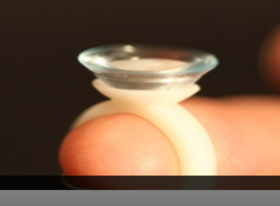
    trouble with your schleral lensesAnother variation to the standard lens inserters is a ring-style lens applicator by EZI Scleral Lens. It was designed by a post-transplant patient who like so many, had trouble inserting his scleral lens without getting a bubble. Read Tim’s story.

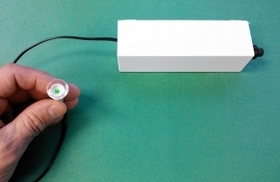
    If you have tried the above techniques and still have trouble applying scleral lenses there are a number of devices available that may help. Dalsey Adaptives has developed the See-Green devicetrouble with your schleral lenses that can be used to help successfully apply scleral contact lenses. The See-Green system comes with a stand that holds a lighted plunger (Figure 2). Using this system, you don’t hold the lens, you lower your eye onto it, which leaves both hands free for improved lid control. The light at the center of the plunger is used as a target to help you position the lens centrally on the eye. Click here to see the detailed instruction sheet.

    Scleral lenses offer good vision and comfort but can be challenging to manage. Discuss these options with your eye care professional to get his or her recommendation for your specific situation.

    1/28/16


    CathyW headshotCathy Warren, RN
    Executive Director
    National Keratoconus Foundation

Layers of the Retina

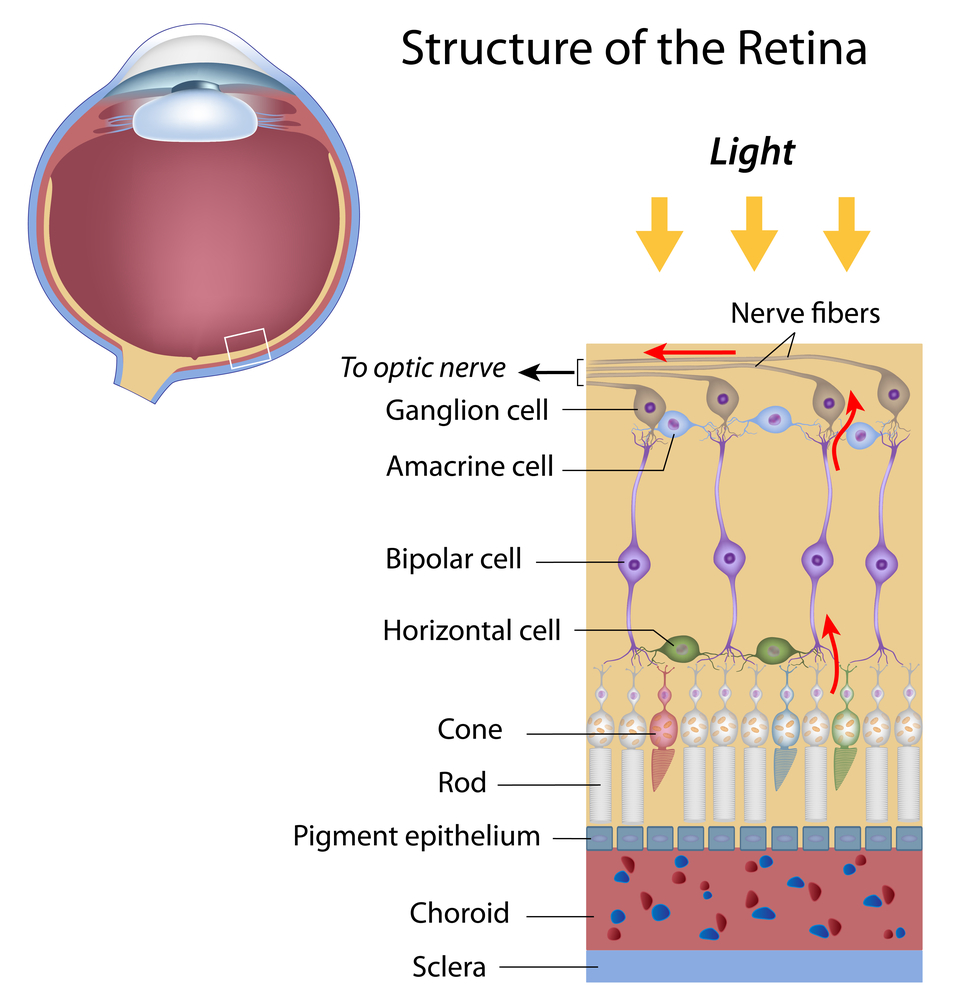
The retina at the back of the eye is essential for all vision. Each layer of cells in this tissue serves a specific purpose. As we prepare for Age-Related Macular Degeneration Awareness Month in February, a closer look at the layers of the retina and their function.

layers of the retina

Layers of the Retina

Choroid – This is made up of a layer of blood vessels that supply oxygen and nutrients to the retina. Defect in the CHM gene can cause choroideremia, leaky blood vessels can expand in the retina causing wet age-related macular degeneration (AMD) and diabetic retinopathy.

Retinal pigment epithelium – This is a single layer of cells that provide essential nutrition and waste removal for the photoreceptor cells. Accumulation of waste can lead to AMD and Stargardt disease.

Photorecptors – This is where the rods and cones are located that convert light into electrical signals. Rods help you with night and peripheral vision. Cones are more concentrated in the macula (the central part of the retina) and proved central and color vision. Death of the rods can cause vision loss called retinitis pigmentosa, while AMD is the loss of central vision.

Horizontal cells – These cells are connect to the photoreceptors that surround the bipolar connected photoreceptor cells and help the help integrate and regulate the input from multiple photoreceptor cells, increasing your visual acuity.

Bipolar cells – The dependence of each layer of the retina on each other is exemplified here. These cells take the electrical information from the photoreceptor cells and pass it along to other retinal cells.

Ganglion cells – These cells extend to form an optic nerve that conveys information to the brain and take the electrical information from the bipolar cells and process it to determine shapes, contrast and color. Glaucoma vision loss results from high intraocular pressure that affects the optic nerve, interrupting the signals to the brain.


Wearing Contact Lenses in Winter

Wearing Contact Lenses in Winter This has been a cold winter so far, and since it is only January, it is bound to get colder. The extreme cold, combined with winds, snow, rain and other environmental factors, can really take a toll on your eyes. And while it may be snowing or raining, winter air is actually drier than any other season. This can be especially difficult if you wear contact lenses. Here is what you should know about wearing contact lenses in winter.

  • Wear sunglasses for protection from UV rays and wind. Your eyes can become sunburned which cause blurry vision and can make your eyes feel like they are burning (think of your sunburned skin feels) for 24 to 72 hours. It will also protect your eyes from snow, rain or anything else the wind can send your way.
  • Avoid direct sources of heat such as heating vents and fireplaces. Indoor heating can draw the moisture out of the air, so consider a humidifier to help maintain the correct amount of moisture in the air to help keep eyes moist. Cool-air humidifiers have less of a tendency toward mold and bacteria.
  • Speaking of hydration, we also tend to drink less water in the winter months, so make a concentrated effort to keep up your water intake.
  • If it is so dry, why are my eyes watering? This is a common question and the answer may be a bit counter-intuitive. Anything that irritates your eyes, including dryness, causes a tearing reflex. Your tear glands go into overdrive trying to replace the moisture to your cornea. To try and reduce the tearing, you can use eye drops or artificial tears specifically designed for use with contact lenses.
  • Your eyes are not the only thing that dries out in the winter, so does your skin. Try to put in your contacts before moisturizing your skin, especially your hands. So wash your hands, put in your lenses and then use your creams and lotions.
  • Change out your contact lenses regularly in cold weather according to the recommended schedule, be it daily, every two weeks or monthly. This will allow them to better conduct oxygen, reduce irritation and increase comfort.
  • Take a break from your contacts and wear your eyeglasses. Putting them on when you get home from work can make a big difference. Contact lenses dry your eyes out on their own, when you add cold weather it gets that much worse.
  • Get plenty of sleep, which also helps with the dryness and fatigue. This will help you start the day with your eye refreshed and ready for the many things you will put them through throughout the day ahead.

Do you have any other suggestions that have helped you cope when wearing contact lenses in winter?

1/15/16


  Susan DeRemerSusan DeRemer, CFRE Vice President of Development Discovery Eye Foundation

7 Tips for Living With Glaucoma

living with glaucoma
Did you know January is Glaucoma Awareness Month?  Although no cure exists, the eye disease may be treated with medication and surgery.  If left undiagnosed and untreated, however, glaucoma can cause permanent damage to vision.  According to the National Eye Institute, glaucoma affects more than three million people in the United States. The population that is at highest risk is adults over the age of 60. Glaucoma affects vision by damaging the optic nerve and typical vision loss occurs in the peripheral visual field. This type of loss can create difficulty performing everyday tasks. To mark the importance of Glaucoma Awareness Month, Low Vision Focus @ Hadley offers these tips to improve independence and safety for people with glaucoma-related vision impairments.

Tips for Living With Glaucoma

  1. Loss of peripheral vision makes it difficult to see steps and stairways.  Marking treads and handrails with contrasting colored paint or tape can improve navigation and reduce the risk of falling.
  2. Persons with glaucoma often experience difficulty adjusting to darkness or darkened rooms. Increase illumination in dark closets or hallways by installing additional lighting fixtures. When outdoors at night, carry a strong flashlight.
  3. Area rugs can pose a hazard for persons with visual field loss.  It’s best to keep home pathways and work areas free of extra floor coverings.
  4. In all locations where you might be a frequent visitor, ask someone to give you a tour.  It goes without saying you need to know where the bathroom is located, as well as how to exit the building from a variety of locations.
  5. Some persons with glaucoma prefer to use a human guide when traveling in unfamiliar places.  To use a human guide effectively, grasp the guide’s arm firmly just above the elbow and walk a half a step behind. This positioning gives the most protection from potential obstacles and allows both people to function as a team.
  6. Get in the habit of consistently closing kitchen and bathroom cabinets, especially those above countertops.  Make sure doors are either all the way open or shut.  Practicing both of these safety techniques can greatly reduce the risk of head injury.
  7. Before reaching down to pick up dropped objects, place your hand, palm out, about 12 inches in front your face.  This way, you’ll make sure you don’t hit the edges of tables or countertops with your forehead.

Remember, although glaucoma cannot be cured, it can be treated.  Regular eye exams, especially for adults over 60, are critical to control the spread of the disease.  For those who are affected by vision loss, it’s important to remember that the acquisition of some simple adaptive skills and techniques can help maintain safety and independence.  Low Vision Focus@Hadley is dedicated to assisting persons with low vision to live life to the fullest all year long. For more information on how Low Vision Focus@Hadley can help you or someone you know, please visit our website www.lowvisionfocus.org, or call (855) 830-5355 to find out about our free programs and materials.

1/12/16

Ed Haines - living with glaucomaEd Haines
The Hadley School for the Blind
Low Vision Focus @ Hadley

Top 10 Articles of 2015

eye facts and eye disease
In looking at the many articles we shared with you in 2015, we found that your interests were varied. From the science of vision, eye facts and eye disease to helpful suggestions to help your vision.

Here is the list of the top 10 articles you read last year. Do you have a favorite that is not on the list? Share it in the comments section below.

    1. Rods and Cones Give Us Color, Detail and Night Vision
    2. 20 Facts About the Amazing Eye
    3. Understanding and Treating Corneal Scratches and Abrasions
    4. 32 Facts About Animal Eyes
    5. 20 Facts About Eye Color and Blinking
    6. When You See Things That Aren’t There
    7. Posterior Vitreous Detachment
    8. Can Keratoconus Progression Be Predicted?
    9. Winter Weather and Your Eyes
    10. Coffee and Glaucoma: “1-2 cups of coffee is probably fine, but…”

Do you have any topics you would like to see discussed in the blog? Please leave any suggestions you might have in the comments below.

1/7/16


Susan DeRemerSusan DeRemer, CFRE
Vice President of Development
Discovery Eye Foundation

Silent Thief of Sight – Glaucoma

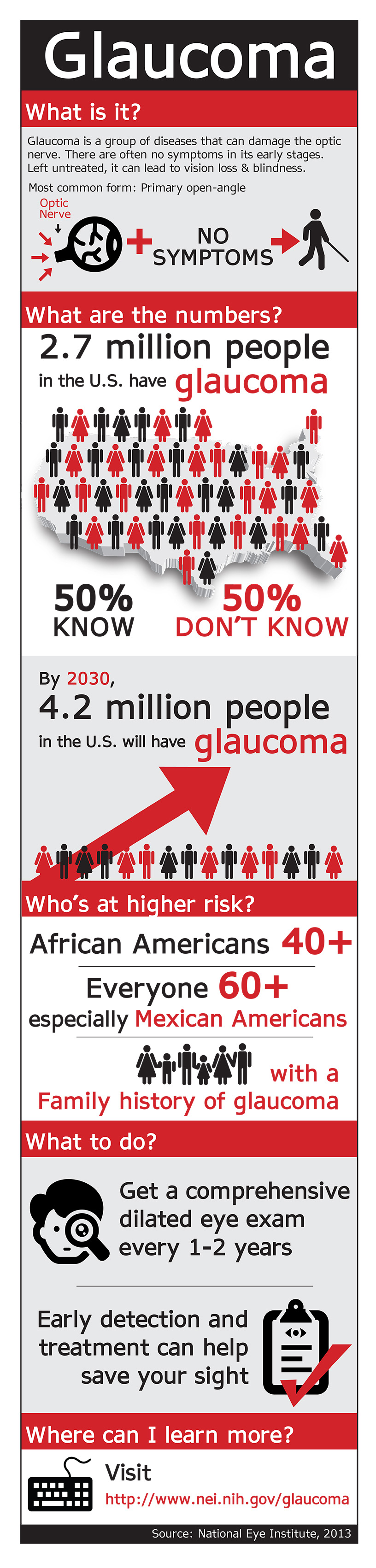
January is National Glaucoma Awareness Month. The National Eye Institute, through their education program NEHEP, have created this infographic to provide you with information you need to know about this blinding eye disease.

When adults reach their 40s, they often begin to notice small changes in their vision that can affect their daily lives and jobs. It could be difficulty in reading a book or working on a computer. This can be annoying, but it can often be addressed by seeing an eye care professional for comprehensive dilated eye exam. This allows the doctor to detect diseases and conditions that can cause vision loss and blindness and yet have no symptoms in their early stages.

Silent Thief of Sight – Glaucoma

Glaucoma is one of these age-related eye diseases that has no early symptoms, which is why it is called the silent thief of sight. It is actually a group of diseases that can damage the eye’s optic nerve and result in vision loss and blindness. Open-angle glaucoma is the most common form disease.

In addition to an eye exam, you can reduce your chances of losing your vision to glaucoma by also:

  1. Live a healthy lifestyle that includes maintaining a proper weight, eating healthy foods, and not smoking.
  2. Know your family history to determine if you are at a higher risk for some eye diseases.
  3. Protect your eyes against harmful UV rays from the sun or your computer by wearing sunglasses when you are outdoors or computer glasses when using the computer for extended periods of time.
Silent thief of sight glacoma
Courtesy of NEI/NEHEP

1/5/16


Susan DeRemerSusan DeRemer, CFRE
Vice President of Development
Discovery Eye Foundation
Best Wishes From Discovery Eye Foundation

As 2015 draws to a close, we want to thank you for reading this blog and trusting us to answer your questions. This blog is the product of a great group of eye care professionals and Discovery Eye Foundation (DEF) staff. Please consider a tax-deductible donation to DEF to show your appreciation.

Donate to Discovery Eye Foundation
New year 2016 and old year 2015 written on sandy beach with waves

We look forward to continuing to provide you with the most current information on vision, eye diseases, resources and personal stories in 2016.

Best wishes for a healthy and happy 2016!

12/29/15

Susan DeRemerSusan DeRemer, CFRE
Vice President of Development
Discovery Eye Foundation
9 Tips To Relieve Digital Eye Strain

Online shopping has continued to grow this year, which means more people are spending more time on computers, tablets and phones. While the convenience of online shopping can’t be beat, it could be costing us sleep, giving us headaches, making our vision blurry…and even affecting our posture.

Digital Eye Strain

Digital eye strain (DES), also known as computer vision syndrome (CVS), is a consequence of spending two or more hours at a time looking at a digital screen. Nearly 30% of adults spend more than 9 hours each day using digital devices, while 25% of children use digital devices more than 3 hours a day.

This can result in dry or itchy eyes, blurred vision, eye twitches, headaches and even back and neck pain. Using digital devices for an extended period of time increases your tendency to lean into the device, as you try to focus or compensate for glare from reflected light (room lighting or windows). Holding these positions for long periods of time are what create the back and neck pain.

As for the many eye symptoms, they can come from

  • poor lighting
  • improper viewing distance from device
  • not blinking often enough
  • poor screen contrast
  • glare on the screen
  • UV blue light

To help you deal with DES, here are 9 tips to relieve digital eye strain.

9 tips to relieve digital eye strain

12/22/15


Susan DeRemer, CFRE
Vice President of Development
Discovery Eye Foundation

5 Elements of Accessible Web Design

A common misconception is that all you need to have a successful blog or website is good content. While content people want to read is important, if you can’t see it, or it is difficult to read, very few people are going to take the time to try. There is lots of good content to choose from.

Making your content easy to scan and read and using great graphics that can tell a story are just as important. Especially if you want to reach the millions of potential readers that are blind or visually impaired.

While a person with low vision (due to age-related macular degeneration, cataracts,glaucoma or other eye diseases that are related to aging) can increase font size or graphics by enlarging them with a pinch of the fingers or scroll of the mouse, the result is often blurry and still difficult to see.

If a person is blind and using a screen reader, what they hear may not match what is written or displayed. A picture without underlying descriptive text is worthless. And when a blind person is using a screen reader to read a web site, they will often tab from link to link to scan your article, skipping over your text, to get a sense of what the options are. “Click here” says doesn’t tell the reader anything.

Here are 5 essential elements of accessible web design.

5 elements of accessible web design

12/15/15

Susan DeRemerSusan DeRenmer, CFRE
Vice President of Development
Discovery Eye Foundation

6 Tips to Help With Holiday Stress

We all know that the holidays can be stressful with the many demands of shopping, baking, parties and the expectation that you should be filled with cheer and goodwill. This is all daunting under the best circumstances, but if you are also losing your vision to eye diseases such as glaucoma, age-related macular degeneration or diabetic retinopathy, the depression can increase.

6 Tips to Help With Holiday Stress

holiday stress
Being realistic, planning ahead and asking for help will let you deal with the stress and depression that may come with the holidays. Here are six tips that will help you deal with the pressures of the holidays, with additional tips for those with vision loss.

  1. Begin by realizing you don’t have to be happy just because the holidays are here. You may have experienced a loss of someone close to you that makes celebrating the holidays hard.
     
    With vision loss: You may miss seeing or putting up decorations; baking for friends and family; or seeing the joy and smiles of loved ones. You can’t force yourself to be cheerful because of the time of year.
  2.  

  3. While the common reaction to depression is stay home and isolate yourself, don’t, it will only make you feel worse and dwell on things you cannot change. Join friends when they ask you out, find community events to attend or volunteer. Sharing time with others can provide a welcome distraction and lift your spirits.
     
    With vision loss: It is common to be uncomfortable with asking friends and family for a ride, but if they are attending the same party of community event, ask them if you can get a ride. They won’t mind a will be glad you are there. Worst case, call a taxi or use Uber.
  4.  

  5. Don’t expect perfection. You need to define for yourself what would make a great holiday and not let the media and retail stores tell you what the holidays should be. Also remember that your traditions will change as your family changes and grows. Look at this as an opportunity to be creative and start new traditions.
     
    With vision loss: Scale your holiday to what is comfortable to you. If fewer decorations make it safer and easier for you to navigate around your home, then reduce the number of things that go up to a few larger items you can enjoy more easily – you can even “decorate” with holiday music.

    Even traditions may need to change. Allow someone else to host the family or neighborhood celebrations. It is nice to pass the honor on and you won’t be so stressed and tired you can’t enjoy the festivities.

  6. Plan ahead so you don’t feel the pressure. This refers to budgeting both time and money.
         • Plan extra time for decorating, shopping, baking, wrapping presents, or any other activity you want to include. Rarely do things run smoothly, especially at holiday time.
        • Decide how much money you can spend, and stick to it. To make money go further, give homemade gifts, start a gift exchange instead of shopping for everyone in your family or office, or make a donation to a charity in someone’s name.

    With vision loss: The same concepts apply – you need to budget your time and money.

  7. Don’t over extend yourself and learn to say no. If you don’t you may become resentful and overwhelmed. Friends and family will understand if you can’t do everything. If your guilt gets the better of you, ask the person making the request to help with the tasks. They will gain a new appreciation of what you do.
     
    With vision loss: Don’t be afraid to let people know that you may not be able to do things as easily as you could in the past. No one, except you, know the limitations you have with your vision. It can be very uncomfortable for others if they think they are asking too much of you, and you could become resentful for being asked to do something beyond your capabilities.
  8.  

  9. Stay healthy. The best way to do this is to watch what you eat and drink, get plenty of sleep, continue any exercise routine you have and take time to relax.
         • You will be tempted with lots of sweets and snacks. Try eating something healthy like cut veggies before you go to the party to curb your appetite. Remember to limit your alcohol because of the calories and the fact that it is a depressant.
         • Sleep will keep you alert and better able to focus what you want to get done and will help keep you more positive.
         • Exercise is a great way to help relieve the stress you feel, give you an extra burst of energy and help you clear your head.
         • Taking 15-20 minutes to just listen to music, take a bath, go for a walk or read book can help you think more clearly and relax. You will actually get more done when you can “re-charge” yourself.

    With vision loss: Everything listed above is good for good eye health. A good diet of brightly colored fruits and vegetables and exercise are very important. Being tired can affect how well you see, and stress has been known to have an adverse effect on a person’s vision.

Because of the busy holiday season, this month we will only be publishing once a week, on Tuesdays.

12/8/15

Susan DeRemerSusan DeRemer, CFRE
Vice President of Development
Discovery Eye Foundation